Special Correspondent:
The Dhaka North City Corporation (DNCC) has taken a tough stance against the long-standing practice of illegal occupation of footpaths for unregulated businesses and alleged extortion, announcing continued eviction drives and legal action against those involved in obstructing public movement.
The city corporation has also warned that action will be taken against influential individuals and groups allegedly backing illegal occupiers and those who attack officials during eviction operations.
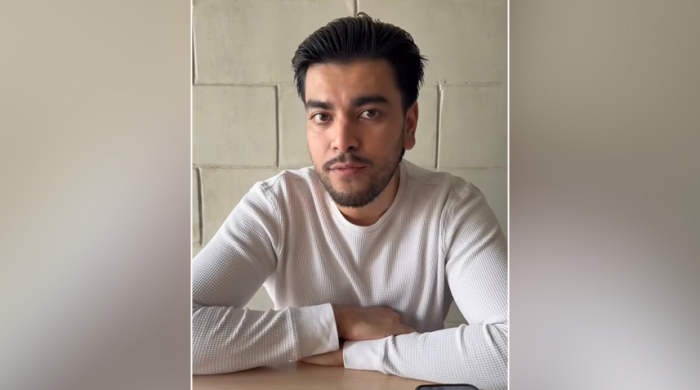
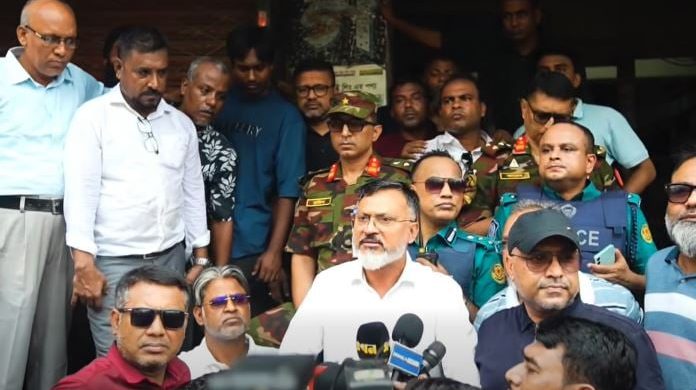
Following an attack during an eviction drive in Mirpur-10, DNCC Administrator Md Shafiqul Islam Khan Milton issued a strong warning, saying the campaign to reclaim footpaths would continue even at the cost of his life.
He said the DNCC would continue removing illegal structures and roadside businesses that obstruct the movement of pedestrians.
“Ensuring the public’s unhindered movement is the responsibility of the city corporation. We will not tolerate any obstruction or attack while carrying out this responsibility,” he said.
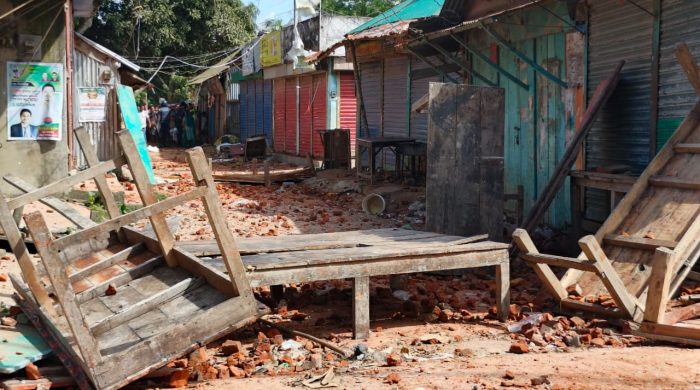
A clash recently took place during an eviction drive on the footpath in front of Hope Market in Mirpur-10.
After visiting the area, the DNCC administrator said those involved in attacking city corporation personnel, police and journalists during the operation would face legal action.
He said separate cases would be filed by the DNCC and police over the incident and that those responsible would be brought to justice following investigation.
Legal action will also be taken over the alleged attacks on journalists, he said.
According to the DNCC, eviction drives have been underway for several days in response to public demand. The administrator described the initiative not only as an administrative responsibility but also as a moral obligation to city residents.
He called for public cooperation to make the campaign effective.
Following the removal of illegal structures beneath the footbridge at Mirpur-10 roundabout, the DNCC has planned to plant trees and create a more pedestrian-friendly environment in the area.
Similar initiatives will be undertaken in other parts of the city, the administrator said.
Addressing residents of Mirpur, Milton said recent events had demonstrated that ordinary people wanted the footpaths to remain free of illegal occupation. He warned that legal action would be taken against anyone who attempts to reoccupy the footpaths in the future, including those allegedly instigating such activities.
Responding to questions about hawkers, the DNCC administrator said discussions and public meetings had previously been held with hawkers, where an agreement was reached that they would not occupy footpaths.
The DNCC had also issued 204 registration cards to provide hawkers with opportunities to conduct business legally on a temporary basis at alternative locations, he said.
However, many of them allegedly returned to the footpaths after a few days.
“Footpaths are meant for public movement. Hawkers will not be allowed to sit there,” Milton said.
The DNCC’s latest position is part of an effort to establish a more permanent mechanism to prevent footpaths from being reoccupied after eviction drives.
In the past, illegal occupation has reportedly returned to several areas after repeated eviction operations.
Amid the DNCC’s tougher stance, investigations into footpath occupation in different parts of Dhaka have brought forward allegations of widespread illegal occupation and extortion.
According to information cited in the investigation, hundreds of footpaths and adjoining areas in important parts of the capital are allegedly controlled by individuals who collect money on a regular basis.
In some areas, shopkeepers are allegedly charged between Tk 150 and Tk 400 per day. Additional payments for electricity or lighting have also been alleged.
The investigation claims that more than 500 people in different parts of the capital are involved in controlling footpaths and collecting money. It also mentions alleged involvement of activists of different political parties, local influential individuals and members of criminal groups.
However, the allegations and identities of the individuals mentioned in the investigation could not be independently verified in every case.
In and around Hope Goli and adjacent footpaths in Mirpur-10, the investigation reportedly found several hundred makeshift shops where money is allegedly collected at fixed rates.
Similar allegations have emerged concerning footpaths in front of Ideal School and Senpara Parbata Government Primary School, as well as areas near Radda and the Fire Service.
Similar allegations of footpath occupation and extortion have surfaced in several major commercial and residential areas, including New Market, Nilkhet, Gausia, Chandrima Market, Dhanmondi, Gulshan, Badda, Shyampur, Shanir Akhra, Mohammadpur, Adabor, Agargaon, Farmgate, Rampura, Moghbazar and Karwan Bazar.
In the New Market area, substantial daily collections are allegedly made from different sections of the footpaths.
The investigation particularly points to Nilkhet intersection, Gausia, Chandrima Market and Nurjahan Market as areas where such activities allegedly take place.
Hundreds of makeshift shops are reportedly located along the footpaths from Nilkhet intersection to different gates of New Market, with shopkeepers allegedly required to pay fixed daily amounts.
Similar allegations have been made regarding areas stretching from Dhanmondi Hawkers Market to Globe Shopping Centre, from Gausia to Eastern Mollika, from Rafin Plaza to Chandni Chowk, and different parts of Nilkhet.
The investigation also claims that an informal system of illegal occupation and money collection has developed on some footpaths inside New Market itself.
Various areas in central and southern Dhaka have also reportedly seen allegations of footpath occupation and extortion.
According to information cited from a police document, money is allegedly collected from more than a hundred shops in and around Dhupkhola Bazar.
There are also allegations of daily collections from vehicles at the Shyampur microbus stand and from shops at Shyampur kitchen market.
Similar complaints have been reported from footpaths in Shanir Akhra, Mohammadpur, Adabor, Agargaon, Farmgate, Rampura, Moghbazar and Karwan Bazar.
In Karwan Bazar, allegations of illegal occupation and money collection have emerged from areas around Janata Tower, Station Road, Tejkunipara, DIT Market, fish markets, fruit markets and footpaths adjoining different shops.
Similar allegations have also been made about local influential individuals and so-called line managers collecting money from footpath businesses in Rampura, Moghbazar and Agargaon.
However, without independent verification and statements from the individuals concerned, none of those named in connection with the allegations can be conclusively identified as offenders. A proper investigation by the relevant authorities and law enforcement agencies would be necessary to establish the facts.
The investigation also points to allegations of political patronage in some cases of footpath occupation, although the identities of those allegedly providing protection are said to have changed over time.
Sources claim that the same line managers and local operators often remain active while different influential individuals are allegedly cited as their backers.
According to the sources, an economic network operates by facilitating the occupation of footpaths and collecting money. As a result, shops often return to the same locations shortly after eviction drives.
Crime analyst and Dhaka University Associate Professor Dr Touhidul Haque said simply evicting street vendors at the grassroots level would not provide a lasting solution to the problem.
He said many hawkers allegedly pay money to occupy footpaths. Therefore, removing them during an eviction drive may not prevent illegal occupation from returning if the influential networks behind the system remain active.
He suggested identifying influential individuals involved in controlling footpaths and taking legal action against them.
He also recommended allowing hawkers to conduct business at designated locations and times, making holiday markets more effective and introducing regular monitoring to prevent reoccupation.
“If political or influential forces are involved in footpath occupation, they must be identified,” he said. “Otherwise, it will be difficult to find a long-term solution simply by evicting hawkers.”
Technology experts have also recommended greater use of technology to monitor footpaths and prevent illegal occupation.
Engineer Md Mofakkharul Islam, managing director of MySoft Haven (BD), suggested deploying smart CCTV cameras and AI-based video analytics in important footpath and market areas.
According to him, such systems could detect illegal structures or new occupations and automatically send alerts to the relevant authorities.
He also proposed creating digital maps of individual footpaths and maintaining the information in a GIS-based database.
Such a system would make it easier to determine which parts of a footpath are legally usable and quickly identify areas that have been illegally occupied.
He also suggested introducing a dedicated mobile application or hotline through which residents could report illegal occupation.
The problem of illegal footpath occupation in Dhaka goes beyond eviction operations. It involves the livelihoods of street vendors, allegations of extortion, local influence, alleged political patronage, law enforcement and broader urban management.
The DNCC administrator’s latest statements, however, make the city corporation’s immediate position clear: footpaths must remain accessible to pedestrians, and the authority intends to take legal action against those who obstruct eviction drives, attack officials or attempt to reoccupy cleared areas.
The key challenge for the DNCC now is to ensure that eviction drives remain regular and effective while preventing reoccupation, identifying the economic networks allegedly operating behind illegal occupation, and creating realistic alternative arrangements for hawkers.
Whether the DNCC’s latest tough stance can be translated into an effective and sustainable system on the ground remains the central question for Dhaka’s residents.