Special Correspondent:
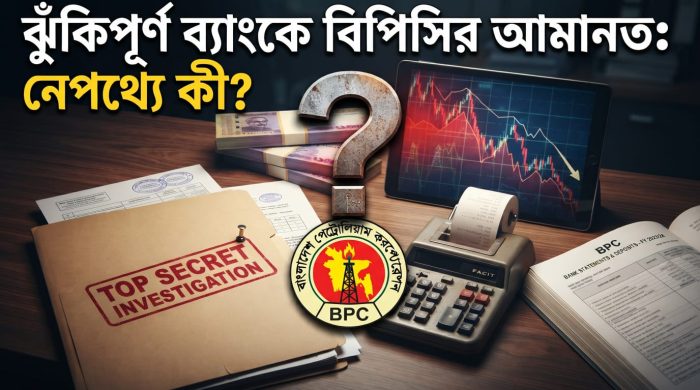
A major controversy has erupted over the placement of more than Tk 4,813 crore in fixed deposits (FDRs) by the Bangladesh Petroleum Corporation (BPC) and its affiliated entities in financially distressed and weak private banks. In response, BPC has formed a seven-member high-level investigation committee to examine the security of these public funds, possible irregularities and allegations of commission trading.
According to an office order signed by BPC Secretary Shahina Sultana, the investigation committee was formed on November 3. BPC Director (Finance) Naznin Parvin has been appointed as the convener, while Manager (Accounts/Fund) Md. Al-Amin will serve as the member secretary.
The committee has been instructed to submit a comprehensive report to the BPC Chairman within one month.
Financial analysts say BPC maintains substantial cash reserves and funds to manage critical national operations, particularly the import of petroleum products. These funds are deposited in various state-owned and private commercial banks in the form of fixed deposits.
However, following governance concerns in the banking sector and liquidity shortages at several financial institutions, questions have emerged over how billions of taka belonging to a state-owned corporation like BPC were deposited in financially vulnerable banks.
The investigation committee will primarily focus on several key areas:
1. Examining the Decision-Making Process
The committee will identify the process through which such substantial funds were deposited in financially distressed banks. It will investigate whose recommendations influenced the decisions and what business or financial criteria were considered before selecting the banks.
2. Investigating Allegations of Commission and Bribery
The committee will conduct an in-depth investigation into whether any officials were influenced by unusually high interest-rate offers from the banks and whether anyone received personal benefits, bribes or illegal commissions in exchange for placing public funds in those institutions.
3. Developing a Strategy to Recover the Funds
One of the committee’s major responsibilities will be to recommend a realistic and effective strategy for safely recovering Tk 4,813.32 crore currently tied up in FDRs with various financially distressed banks.
4. Establishing Safeguards for Future Investments
The committee will also recommend a stronger and more modern policy framework for managing the fixed deposits of BPC and its affiliated organisations. The proposed framework is expected to include proper assessments of banks’ financial health, cash flow positions and long-term reliability before public funds are deposited.
Funds held by state-owned corporations and statutory organisations are essentially public money and must be managed with the highest standards of transparency and accountability.
Placing such substantial public funds in financially vulnerable institutions for the benefit of particular groups or individuals, if established, could constitute serious misconduct and a grave breach of fiduciary responsibility.
The BPC investigation is therefore significant not only in determining past irregularities and fixing accountability but also in strengthening financial discipline across the country’s energy sector.
Ensuring the safe recovery of the Tk 4,813 crore and introducing strict oversight to prevent similar incidents in the future have now become major priorities.