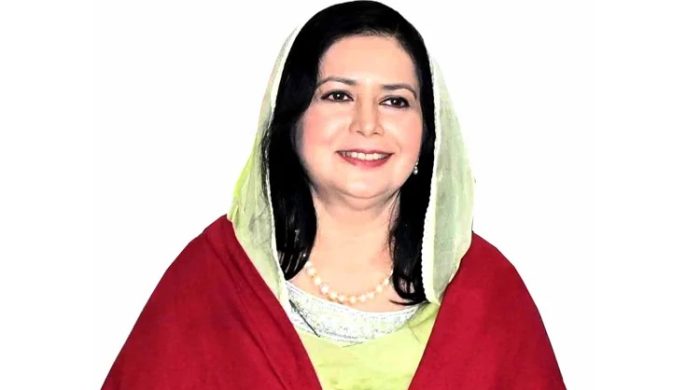
Saifur Rahman, Chairman of S.K.B Stainless Steel Mills Ltd., Proposes Five Key Policy Reforms to Strengthen Economic Self-Reliance, Boost Exports and Accelerate Industrial Growth.To achieve economic self-reliance, accelerate industrialisation, generate employment and enhance export earnings, a comprehensive policy initiative has been proposed to transform Bangladesh into a competitive and attractive global business hub.
The proposal, put forward by Mr. Saifur Rahman, Chairman of S.K.B Stainless Steel Mills Ltd., emphasises competitive manufacturing, export diversification, backward linkage industrial development, SME growth and simplified revenue policies.
According to the proposal, Bangladesh needs to move beyond its heavy dependence on a single export sector and establish a strong, diversified industrial base capable of producing quality products at internationally competitive prices.
The proposal outlines five major policy recommendations:
The government should urgently formulate and implement effective policies and legal frameworks to establish a business-friendly environment under the principle of Ease of Doing Business.
A high-level initiative under the direct supervision of the Head of Government or an appropriate senior authority could ensure timely implementation of these policies.
The proposal notes that several previously adopted business-supportive policies have remained largely unimplemented, creating a prolonged cycle of policy stagnation. Effective monitoring and accountability are therefore essential to accelerate industrial investment, production and employment generation.
To increase export earnings and maintain a better balance between imports and exports, Bangladesh should reduce its dependence on the ready-made garment (RMG) sector and encourage exports of diversified products.
The proposal recommends providing simplified bonded warehouse or special customs facilities against bank guarantees equivalent to the total applicable government revenue on imported raw materials and inputs required for export-oriented manufacturing.
The proposed system would ensure full revenue security while facilitating access to imported inputs at competitive costs.
Two key measures have been suggested:
A. Industry-Specific Minimum Value Addition Requirements
Minimum value addition rates should be determined on an industry-specific basis to prevent misuse of bonded warehouse facilities while encouraging competitive pricing and expansion into new export markets.
A simplified and transparent In-Bond and Ex-Bond accounting and reconciliation system would help ensure proper utilisation of imported materials and prevent revenue leakage.
B. Allowing Advance Production Before Receiving Export Orders
To reduce export lead times and compete effectively with major exporting countries, selected partially export-oriented manufacturing industries should be allowed to import raw materials and inputs for export production against bank guarantees, even before receiving confirmed export orders, purchase orders, Telegraphic Transfers (TT) or Letters of Credit (LC).
This facility could be provided subject to a written undertaking to complete exports within a specified period of 9–12 months.
Such flexibility would enable manufacturers to maintain ready stock, respond quickly to international buyers and secure export orders more efficiently.
A sustainable industrial foundation cannot be established without reducing dependence on imported intermediate raw materials, parts, components and other essential industrial inputs.
The proposal highlights the importance of developing strong backward linkage industries to ensure competitive local production, timely supply and easy availability of industrial inputs.
To attract both domestic and foreign investment in this sector, the proposal recommends reducing import duties on basic raw materials used in backward linkage industries to no more than 1%, while exempting VAT and other applicable taxes.
It also recommends VAT and other tax exemptions at the production stage for locally manufactured industrial inputs.
These measures could encourage investment in domestic intermediate goods manufacturing, reduce foreign exchange expenditure, strengthen supply chains and improve the competitiveness of both export-oriented and domestic industries.
The proposal further stresses that such industrial development is essential for Bangladesh to adapt to the Fourth Industrial Revolution and successfully prepare for its LDC graduation.
To encourage diversified manufacturing and expand the SME sector, the proposal recommends reviewing certain conditions imposed under various National Board of Revenue (NBR) Statutory Regulatory Orders (SROs).
Currently, some SROs specify particular machinery and equipment that must be installed to qualify for customs and tax benefits.
The proposal suggests removing rigid machinery-specific requirements and instead introducing production-capability-based eligibility criteria.
Under the proposed system, manufacturers could qualify for applicable duty and tax benefits if they demonstrate the capacity to manufacture the specified industrial inputs locally or use locally produced inputs in their manufacturing processes.
According to the proposal, such flexibility would reduce unnecessary foreign exchange expenditure on machinery imports, create equal opportunities for SMEs and encourage domestic investment in backward linkage industries.
It would also help prevent monopolistic market practices and promote a competitive free-market economy.
Without such reforms, the intended benefits of existing SROs may remain difficult to achieve, particularly for smaller manufacturing enterprises operating outside major industrial centres.
The proposal also recommends considering a simplified revenue policy with comparatively lower tax rates.
A rationalised tax structure could encourage business expansion, improve voluntary tax compliance, reduce the incentive for tax evasion and ultimately increase the overall revenue base and government collections.
The proposal emphasises that Bangladesh’s long-term economic prosperity depends on a coordinated strategy involving competitive manufacturing, diversified exports, domestic industrial input production, SME development and an investment-friendly business environment.
It argues that policy formulation alone is not sufficient; effective implementation, institutional accountability and timely administrative action are essential to achieving the desired outcomes.
The proposed reforms, if appropriately evaluated and implemented, could help Bangladesh reduce import dependency, conserve foreign exchange, attract investment, generate employment, expand export markets and establish itself as an attractive regional and global Business Hub.
Mr. Saifur Rahman
Chairman
S.K.B Stainless Steel Mills Ltd.