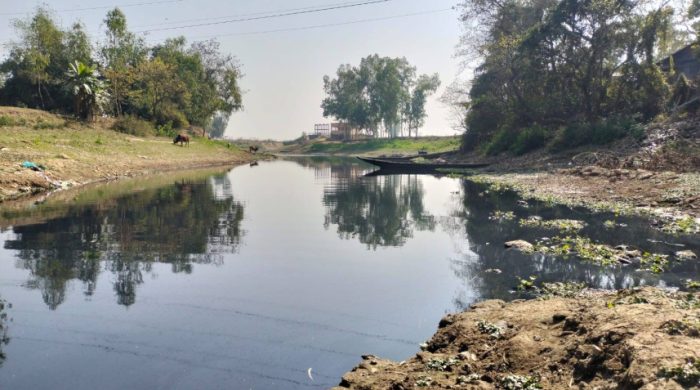
The Sutang River, once a blessing, has now become a curse. Due to constant encroachment and pollution, the river water has become poisonous. More alarmingly, microplastics have been found in the river water and in fish from the Sutang in Habiganj.As the world observes the International Day of Action for Rivers today (March 14), concerns are growing over the worsening condition of the Sutang river.A study by Habiganj Agricultural University, published late last year, found microplastics in both the river water and fish. Researchers say the river’s aquatic environment now faces serious risks due to industrial waste and unplanned urbanisation.
The study analyses the digestive systems of 30 fish collected from the river and found a total of 51 plastic particles. On average, each fish contained 1.7 microplastics. Larger fish were found to contain relatively more microplastics, as they remain in the polluted environment for longer periods.Home
বাংলা
Editor’s Pick
Column by Mahfuz Anam / The challenges before the prime minister
13 March 2026, 00:00 AM
THE THIRD VIEW
The family card: Universal promise or targeted programme?
12 March 2026, 16:40 PM
Big Picture
Bangladesh in US trade crosshairs
13 March 2026, 03:23 AM
Bangladesh
Fuel panic buying slashes ride-sharing income
13 March 2026, 00:00 AM
Economy
US launches trade investigation into Bangladesh, others as Trump revives tariffs
12 March 2026, 10:01 AM
Business
Microplastics detected in Sutang river; up to 46.6 particles per litre: Study
Fish of the Habiganj river carry 1.7 microplastic particles on average, it says
15 MIN(s) ago
BANGLADESH
SHARE
Mintu DeshwaraMintu Deshwara
Mintu Deshwara
Sutang.jpg
Photo: Star
The Sutang River, once a blessing, has now become a curse. Due to constant encroachment and pollution, the river water has become poisonous. More alarmingly, microplastics have been found in the river water and in fish from the Sutang in Habiganj.
As the world observes the International Day of Action for Rivers today (March 14), concerns are growing over the worsening condition of the Sutang river.
Google News LinkFor all latest news, follow The Daily Star’s Google News channel.
A study by Habiganj Agricultural University, published late last year, found microplastics in both the river water and fish. Researchers say the river’s aquatic environment now faces serious risks due to industrial waste and unplanned urbanisation.
The study analyses the digestive systems of 30 fish collected from the river and found a total of 51 plastic particles. On average, each fish contained 1.7 microplastics. Larger fish were found to contain relatively more microplastics, as they remain in the polluted environment for longer periods.
Researcher Md Shakir Ahmed said that, according to the research data, between 6.67 and 46.6 microplastic particles were found in each litre of water from the Sutang river. Among these, plastic fragments and fibres were the most common, with an average size ranging from 0.1 to 0.5 millimetres.
Laboratory chemical analysis identified harmful plastics such as polyethylene (PE), polyethylene terephthalate (PET), and polyamide. Researchers said these plastics mainly originate from packaging materials and the textile industry.
The study warned that the presence of microplastics in rivers and aquatic environments could pose a serious threat to human health and biodiversity in the future.Pollution in freshwater systems could pose a major long-term risk to both human health and biodiversity. Therefore, regular research and effective measures to control pollution are essential, he added.
Abdul Kayium, a resident of Shahpur, told this correspondent that the Sutang river was once full of fish. People in the area used to earn their living by catching fish from the river. But now the water is polluted with toxic waste, making it difficult to live in the foul-smelling area. He said that although the issue has been repeatedly reported to the administration, no action has been taken. If the situation continues, the environment of the area will be destroyed.Gulnahar Begum, an assistant teacher at a primary school in the Sadhurbazar area, said the river water has become toxic and is causing serious environmental damage. “We cover our noses and mouths while going to and from school. It has become difficult to live in the area because of the stench.”
Shafiq Mia, a resident of Bhadgari village, said local people are suffering as the water of the Sutang river has become toxic. “We have to cross the river for our livelihoods. But as soon as the water touches our bodies, it causes itching.”
Tofazzal Sohel, general secretary of the Habiganj district unit of Bangladesh Poribesh Andolon, said the condition of the Sutang River and nearby canals and wetlands clearly shows that unplanned industrialisation is causing environmental destruction instead of development. Dumping industrial waste into rivers and water bodies has severely damaged agriculture and the environment in the region.
The Sutang river, listed at number 1206 by the Bangladesh River Commission, is a transboundary river between Bangladesh and India. It is about 81 kilometres long and has a basin of nearly 400 kilometres. Originating in the Indian state of Tripura, the river flows through Habiganj Sadar, Lakhai, Shayestaganj, and Chunarughat upazilas before joining the Kalni river in Lakhai upazila.
Once, the Sutang river was an important means of communication in the haor region as it had water throughout the year. However, its natural form has changed over time due to a lack of dredging and the dumping of industrial waste.
In several areas along the riverbanks — including Karab, Chharipur, Uchail, Rajiura, Sadhurbazar, Mirzapur, Ghorail Char, and Rahimpur — the river water has turned black and emits a strong stench. Various aquatic animals are also dying in the polluted water.
According to existing laws in the country, all industrial waste must be treated at the source. However, many factories in the region are not complying with this requirement. There have long been allegations of reckless dumping of industrial waste into the river, which is also a direct violation of the constitutional rights of local residents, he added.
Professor Dr Mohammad Jahirul Hoque, vice chancellor of Metropolitan University, said irresponsible and unplanned industrialisation destroyed the cross-border, fast-flowing Sutang river over the last two decades. The Sutang river is not just a river; it is a treasure of local fish and biodiversity in the region.
The Sutang was once one of the main sources of water for agriculture and fisheries in at least four upazilas of Habiganj. It is also an important water source for the haor region. In other parts of the country, rivers are usually polluted by industrial establishments built on their banks. But Habiganj is different.
Here, industrial establishments have been built a few kilometres away from the river. Waste is dumped into the river through canals dug to connect factories to the river. Among them, the Shailjura Canal was dug with government funds. As a result, the once-prosperous Sutang River has turned into a toxic drain due to industrial waste. Fish breeding in the river has stopped, and thousands of people face health risks as the water has become unfit for consumption, the professor said.
He added that microplastics have been found not only in fish from the Sutang river but also in haor beels and other water bodies in the area. Animals, birds, ducks, and chickens are dying after drinking river water. As a result, an environmental disaster is gradually turning into a human disaster. Industrialisation is necessary for development, but it must be eco-friendly. Interestingly, although industries have effluent treatment plants (ETPs), they are often not operated to reduce costs. These illegal practices are damaging the environment and biodiversity in many areas.Habiganj Agricultural University Vice-Chancellor Professor Dr Syed Sayem Uddin Ahmed said the presence of microplastics in the water and fish of the Sutang river is extremely concerning. He added that the research would play an important role in environmental protection and policymaking.
Sharif Jamil, member secretary of Dharitri Rakshay Amra (Dhara) and coordinator of Waterkeepers Bangladesh, said if effective measures are not taken to curb pollution from industrial waste and unplanned urbanisation, the situation could soon spiral out of control.