Narayanganj Correspondent :
For many people, the graves of their ancestors are more than burial sites—they are enduring symbols of family history and identity. In Bangladesh’s Rupganj upazila, hundreds of residents now fear they may once again lose not only their homes but also the graves of their loved ones to a proposed government land acquisition project.
Among them is Kazi Mazharul Anwar, who stood silently beside the graves of his mother and brother in the courtyard of his home before expressing his anguish.
“My grandfather’s and maternal grandfather’s graves were in Purbachal. After the government acquired the land, those graves were demolished and residential plots were built there. Will my mother’s grave now face the same fate?” he asked.
Anwar is one of hundreds of residents from the villages of Phulbaria, Shimulia, Kuladi and Brahmankhali who say they are reliving a nightmare. Three decades ago, they lost their ancestral homes to the Purbachal New Town Project and rebuilt their lives elsewhere. Now, they claim another government agency is preparing to acquire their land for a new special project.
Hundreds of Families at Risk
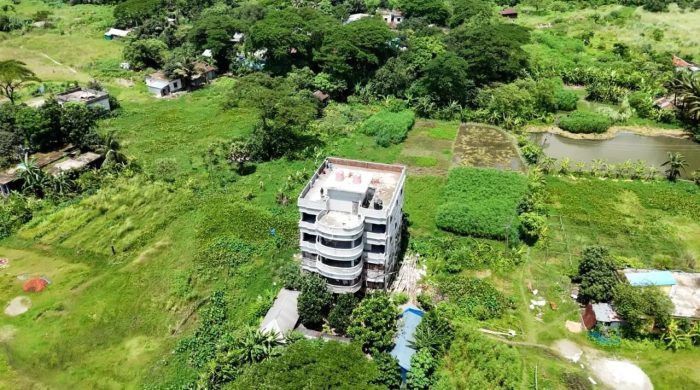
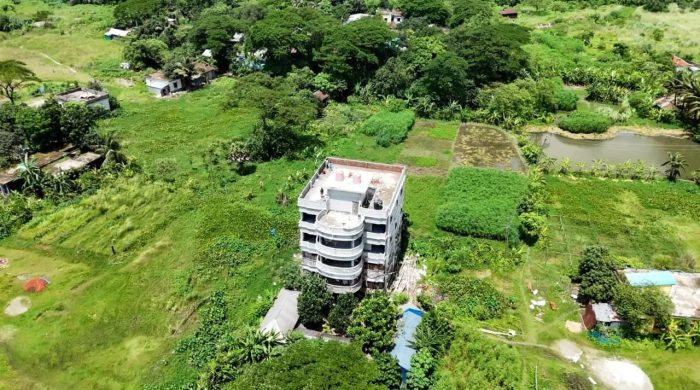
According to local residents, the proposed acquisition covers approximately 38.76 acres of land, potentially affecting around 200 families. They fear losing their homes, agricultural land, family graveyards and primary sources of livelihood.
During a visit to the affected areas in Daudpur Union on Saturday morning, uncertainty and anxiety were evident throughout the four mouzas. Residents repeatedly questioned whether they would once again be forced to abandon their homes because of another government project.
Many recalled that during the 1990s, land was acquired for the Purbachal project, forcing them to relocate with what they describe as inadequate compensation. After years of hardship, they rebuilt their homes and livelihoods through farming and small businesses. Now, they say, that hard-earned stability is once again under threat.
Allegations of Secret Survey
Residents allege that over the past month, a high-level delegation from the government agency conducted multiple site inspections and land surveys without public consultation.
According to land schedules reportedly signed by an official from the agency’s planning division, the acquisition plan includes 19.21 acres in Raghurampur, 15.85 acres in Brahmankhali, and 3.70 acres in Kuladi, totalling 38.76 acres.
Locals claim the surveys were carried out without public hearings or consultation. They also fear that government compensation rates would be insufficient to purchase equivalent land elsewhere, leaving many families homeless and without farmland or income.
“Are We Not Human?”
Residents who were displaced during the Purbachal project expressed deep frustration.
“They evicted us once for Purbachal, and now they want to evict us again. Are we not human?” said Sayem Bhuiya.
He added that around 200 families, more than 100 family graves, over 1,600 registered voters, and countless children would be directly affected.
“Where will these people go? How will they survive? What will happen to their children’s future?” he asked.
Another resident, Nazrul Islam Molla, echoed similar concerns.
“They drove us out of the township area. We built new homes outside it. Now we’re hearing they want to evict us again. Tell us, where are we supposed to go?”
Livelihoods Under Threat
Local farmers said agriculture is the primary source of income for most families in the proposed acquisition area. Losing their land would mean losing both their homes and their livelihoods.
For Kazi Mazharul Anwar, displacement has become a recurring reality. After leaving his ancestral property for the Purbachal project, he built a modest house on nearly five decimals of land in Raghurampur. That home now also falls within the proposed acquisition zone.
Standing beside the graves of his mother and brother, Anwar questioned the state’s responsibility toward its citizens.
“What kind of country do we live in if it cannot guarantee the security of our homes?” he said.
“Are we citizens of this country, or are we like refugees? If we’re forced to leave, where will we go? How will I visit my mother’s grave?”
His youngest son, a first-grade student at Hirnal Government Primary School, also worries that another displacement would disrupt his education.
Calls for Reconsideration
Elderly resident Abdul Matin said residents have spent decades preserving their ancestral land.
“We’ve survived by holding on to our forefathers’ land. If the government takes it away with minimal compensation, we won’t even be able to buy a small piece of land elsewhere,” he said.
According to local election office data, the affected mouzas are home to more than 1,600 registered voters, and residents fear the acquisition would create widespread uncertainty over permanent residence and livelihoods.
Community meetings involving local residents, including women and youth, have taken place in recent days. Many have vowed to launch protests if necessary, insisting they will not surrender their ancestral land.
The affected families are urging the government to use available public land instead of privately owned residential properties for the project. They have also called for the proposed acquisition plan to be reviewed to protect their homes, livelihoods and family graveyards.
Administration Responds
Rupganj Assistant Commissioner (Land) Farid Al Sohan confirmed that the matter is known to the local administration and that relevant information had been submitted to the Deputy Commissioner’s office about a month ago.
He said the government has the legal authority to acquire land when necessary and that compensation is provided according to existing laws.
He also advised affected individuals to submit written complaints if they believe they are being unfairly affected, adding that such complaints would be investigated.