Special Correspondent:
Bangladesh is awaiting the election of a new President following the resignation of Mohammed Shahabuddin. In the interim, Speaker Major (Retd.) Hafiz Uddin Ahmed is serving as Acting President.
Under the Constitution, Parliament is required to elect a new President within the stipulated timeframe. With the Bangladesh Nationalist Party (BNP) holding an overwhelming majority in Parliament, the party’s nominee is widely expected to become the country’s next Head of State.
BNP leaders have said the party’s Standing Committee will make the final decision on its nominee. The Law Minister has also confirmed that the presidential election will be completed during the next parliamentary session. Meanwhile, the Election Commission has already initiated the electoral process through consultations with the Acting Speaker.
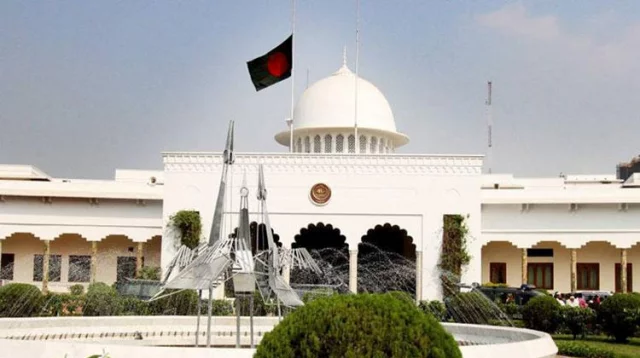
The Constitution recognises the President as the Head of the Republic and the nation’s first citizen. Article 48(2) states that the President holds precedence over all other persons in the State.
Despite this constitutional status, the office has rarely exercised the influence many believe it should. Under Bangladesh’s parliamentary system, executive authority rests primarily with the Prime Minister, leaving the presidency largely ceremonial. Article 48(3) of the Constitution requires the President to act on the advice of the Prime Minister in almost all matters, with limited exceptions relating to the appointment of the Prime Minister and the Chief Justice. Even in those areas, Presidents have seldom exercised independent discretion.
Former President and the country’s first Chief Adviser of the Caretaker Government, Justice Shahabuddin Ahmed, once famously remarked that “the President has little to do except visit graves,” underscoring the largely symbolic nature of the office.
However, constitutional experts argue that reducing the presidency to a ceremonial role overlooks its broader significance. The President symbolises national unity, constitutional continuity and the stability of the State. During periods of political or constitutional uncertainty, the office can play an important moral and institutional role. A respected, experienced and principled President may help preserve democratic order and constitutional governance during times of crisis.
For this reason, many believe the country’s highest constitutional office should not be occupied merely by someone known for unquestioning loyalty to the ruling party. Instead, Bangladesh needs a President of integrity, independence, experience and national stature—someone capable of rising above partisan politics and earning the confidence of all sections of society.
This year’s presidential election carries added significance following the restoration of the non-party caretaker government system. Under recent constitutional developments and court rulings, the next general election is expected to be conducted under a caretaker administration. The transition of power from an elected government to a caretaker government could become politically sensitive, potentially giving rise to disagreements and tensions among political parties.
In such circumstances, a President who enjoys broad public and political confidence could help facilitate dialogue and contribute to resolving constitutional or political disputes. Many observers therefore see the upcoming presidential election as far more than a constitutional formality; they view it as an important step for Bangladesh’s democratic future.
The debate has also gained momentum amid discussions on possible constitutional reforms. The National Consensus Commission has reportedly considered proposals aimed at creating a better balance between the powers of the President and the Prime Minister. BNP has also expressed support for reviewing the existing distribution of executive authority. Should future constitutional amendments expand the President’s responsibilities, the importance of selecting a capable and impartial individual will become even greater.
Many citizens believe the presidency should never be treated as a political reward or a retirement position for loyal party figures. Instead, it should be regarded as a sacred constitutional responsibility entrusted to someone committed to protecting the Constitution, democracy, the rule of law and the rights of the people.
Public expectations also extend beyond political loyalty. Many argue that the next President should be a nationally recognised figure whose reputation has been earned through years of public service, political leadership or social contribution—not someone whose identity or qualifications become a subject of public curiosity only after nomination.
Integrity remains another key consideration. Critics argue that individuals facing serious allegations or controversial public records should be carefully scrutinised before being considered for the nation’s highest constitutional office.
Many citizens also hope the next President will possess the moral courage to defend democratic institutions and constitutional principles whenever they come under pressure. Rather than remaining silent during moments of constitutional crisis, the President should serve as a guardian of democratic values and national unity.
Bangladesh’s political history has witnessed several appointments of individuals with limited public engagement to important constitutional positions, experiences that many believe have not always strengthened democratic institutions. Consequently, there is growing sentiment that the next President should be someone with a proven record of public service, democratic struggle and commitment to the rule of law.
Since assuming responsibility for governing the country after years of political struggle under the leadership of Tarique Rahman, BNP now faces one of its most significant constitutional appointments. Many observers believe the party has learned important lessons from previous presidential selections. They argue that prioritising unquestioning loyalty over merit has often undermined the dignity and independence of constitutional institutions.
Political analysts note that while rewarding loyalists may offer short-term political convenience, it can ultimately weaken democratic governance and public confidence. As a result, expectations are high that BNP will place national interest above partisan considerations when selecting the country’s next President.
Bangladesh has no shortage of qualified individuals. What many citizens now seek is the political will to choose a President who is honest, experienced, principled, respected across political divides and capable of serving as a true symbol of national unity and public trust.