Special Correspondent:
President of Bangladesh is constitutionally the head of state and holds a position that demands dignity, neutrality and an unblemished public image. The person who occupies the office is expected to remain above political controversy and enhance the country’s image through his personality, conduct and statesmanship.
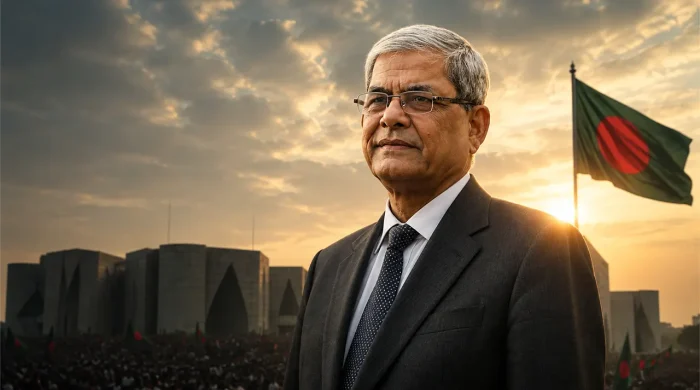
The Bangladesh Nationalist Party (BNP), the ruling political party, has nominated Mirza Fakhrul Islam Alamgir for the presidency, a decision that has drawn attention for placing a veteran politician known for his modesty and political restraint in the country’s highest constitutional office.
At the age of 78, Mirza Fakhrul is widely regarded as a politician who has remained steadfast in his principles and political convictions. Known for his humility, measured language and courteous behaviour, he has often stood apart from the increasingly confrontational political culture of Bangladesh.
The BNP’s decision to nominate him reflects, according to political observers, an effort to recognize a politician who has remained committed to his ideals throughout a long political career. It also represents an emphasis on dignity, moderation and principled politics in the country’s political landscape.
The question of what qualities define an ideal politician has become increasingly important in contemporary society. Integrity, distance from corruption and political misconduct, public trust, commitment to grassroots workers and the willingness to make sacrifices during difficult times are among the qualities expected of a successful statesman. Political observers say that such a combination of qualities has become increasingly rare in modern politics.
Mirza Fakhrul’s political career began during his student days at the University of Dhaka, where he studied economics. He became involved in student politics and served as a member of the then East Pakistan Students Union and as general secretary of the S.M. Hall unit. During the historic mass uprising of 1969, he served as president of the Dhaka University unit.
After completing his studies, he entered the teaching profession in 1972. He taught economics at several government colleges and served as a professor at Thakurgaon Government College until 1986. He later left teaching and entered mainstream politics. In the 1988 election, he was elected chairman of Thakurgaon Municipality.
During the movement against the military rule of Hussain Muhammad Ershad, Mirza Fakhrul joined the BNP. In 1992, he was appointed president of the Thakurgaon district unit of the party. Rising gradually from grassroots politics, he became the BNP’s senior joint secretary general in 2009, acting secretary general in 2011 and full secretary general at the party’s sixth national council in 2016.
From the political crisis surrounding the 2007-08 period, commonly known as the “1/11” era, through the BNP’s prolonged political struggle against the Awami League government, Mirza Fakhrul remained one of the party’s key organizers. He faced numerous political cases, imprisonment and what his supporters described as political repression, but continued to play a central role in maintaining party unity and organizing political movements.
His conduct toward political opponents has also contributed to his public image. Even among people outside his own party, he has often been described as a courteous and soft-spoken politician. At a time when political discourse is frequently dominated by harsh rhetoric, his restrained style has made him a distinctive figure in Bangladesh’s political arena.
For a younger generation seeking political role models, Mirza Fakhrul’s long career as an academic, grassroots politician and senior party leader offers an example of political perseverance and personal restraint, according to his supporters.
His nomination for the presidency comes at an important moment in Bangladesh’s political history. Supporters of the nomination believe that his experience, education, political longevity and reputation for moderation could help strengthen the dignity of the presidency.
If elected and appointed as head of state, Mirza Fakhrul Islam Alamgir would bring decades of political and public life to the country’s highest constitutional office. His supporters hope that his tenure would provide Bangladesh with a president capable of representing the state with dignity, moderation and a strong commitment to political values.