Special Correspondent:
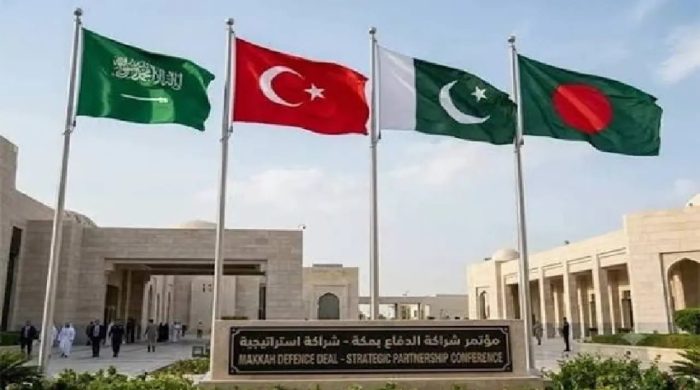
A recent defence cooperation agreement among Saudi Arabia, Türkiye and Pakistan, dubbed the “Mecca Agreement,” has raised a new strategic question for Bangladesh’s foreign policy.
Reports that Saudi Arabia has invited Bangladesh to join the emerging security framework have sparked discussion in the country’s diplomatic and political circles. Analysts say that if Bangladesh eventually joins the bloc, the move could have implications not only for its regional security policy but also for relations with key partners, particularly India.
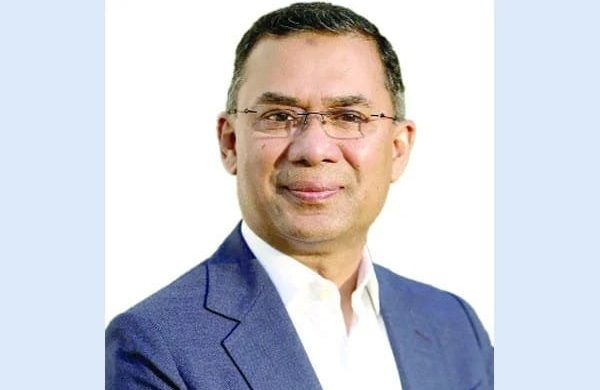
According to a Reuters report, Bangladesh may consider participating if a broader security alliance emerges among Islamic countries in the Middle East. Bangladesh’s Foreign Affairs State Minister Humayun Kabir reportedly said Dhaka views such an initiative positively. He also said Bangladesh’s leadership, particularly Prime Minister Tarique Rahman, was being invited to participate in the initiative.
A source at Bangladesh’s Ministry of Foreign Affairs told Reuters that Saudi Arabia had invited Bangladesh to join the Mecca Agreement. However, details about when the invitation was extended remain unclear. The source, who was not authorised to speak to the media, declined to be identified.
Saudi Arabia, Türkiye and Pakistan signed the mutual defence cooperation agreement this month in the holy city of Mecca. The framework is broadly modelled on NATO’s collective defence principle, under which an armed attack against one member is considered an attack against all members.
Although the three countries have different military and strategic capabilities, their combined strength is significant. Türkiye has NATO’s second-largest military, Pakistan is a nuclear-armed state, while Saudi Arabia is one of the world’s leading energy exporters. The emergence of such a defence framework amid continuing tensions and conflicts in the Middle East could add a new dimension to regional geopolitics.
Türkiye has also indicated that other countries could be allowed to join the agreement in the future. As a result, Bangladesh’s potential participation is not merely a matter of bilateral or regional relations; it is also linked to a much broader geopolitical calculation.
Since independence, Bangladesh has generally avoided direct alignment with any particular military bloc and has pursued a balanced diplomatic policy. Maintaining political, economic and strategic relations simultaneously with India, China, the United States, the European Union, Middle Eastern countries and other major partners has remained one of Dhaka’s key foreign-policy objectives.
Against this backdrop, joining a military alliance could signal a significant shift in Bangladesh’s traditional foreign-policy approach. This is particularly important because the country’s economy is heavily dependent on exports, foreign investment and remittances. Any potential economic consequences of joining a military alliance would therefore need to be carefully assessed.
Bangladesh’s major markets for ready-made garments include the United Kingdom, the European Union and the United States. At the same time, remittances sent by millions of Bangladeshi workers living in the Middle East and other parts of the world remain a major source of foreign currency. Ensuring that any defence or security decision does not adversely affect trade or overseas employment opportunities would therefore be a critical consideration for Dhaka.
Geopolitical analyst Kallol Kibria has argued that Bangladesh’s participation in a military alliance could create new calculations in its relations not only with India but also with China, Iran, Japan, Kuwait, Oman, Qatar, Russia, the United Arab Emirates and the United States.
According to him, Bangladesh’s relations with these countries would not necessarily deteriorate immediately. However, questions could arise over which side Bangladesh was positioning itself on in a changing geopolitical landscape.
One of the most sensitive issues for Bangladesh could be India’s response.
Relations between Dhaka and New Delhi are already experiencing tensions over several issues. Bangladesh has accused the Indian Border Security Force of forcibly pushing people into Bangladesh. Dhaka has also repeatedly sought the return of former Prime Minister Sheikh Hasina, who was ousted following mass protests and is currently staying in India.
Bangladesh has formally requested her extradition, but New Delhi’s final response is still awaited. Against this backdrop, Dhaka’s potential participation in the Mecca Agreement could raise additional diplomatic concerns over how India would interpret the move.
There has also been no decision yet on Prime Minister Tarique Rahman’s possible visit to India. Meanwhile, following recent remarks by Sheikh Hasina from New Delhi, Dhaka has expressed objections over her political activities concerning Bangladesh.
With bilateral relations already in a sensitive state, Bangladesh’s possible participation in a defence framework that includes Pakistan could add another layer of complexity to relations between Dhaka and New Delhi.
India’s Ministry of External Affairs has said that New Delhi is closely monitoring developments in West Asia. However, it remains difficult to predict at this stage how India would respond if Bangladesh formally joined the alliance.
Asif Shahan, a professor of Development Studies at the University of Dhaka, believes that joining a military alliance could create risks for Bangladesh’s export-oriented economy. The country’s economic interests depend heavily on maintaining stable trade and diplomatic relations with a wide range of international partners.
At the same time, he argues that Bangladesh’s foreign policy should not be determined solely by how other countries might perceive such a decision. Dhaka must also consider its own security requirements, economic interests and long-term strategic priorities.
The possibility of joining the Mecca Agreement has therefore presented Bangladesh with a complex strategic balancing act. On one side lies the opportunity to deepen defence and strategic cooperation with Saudi Arabia, Türkiye and Pakistan. On the other is the need to preserve existing relations and economic interests with India and other major global powers.
Ultimately, the key question for Bangladesh is not simply whether to join the Mecca Agreement. The bigger challenge is whether Dhaka can build new strategic partnerships without undermining its long-standing policy of diplomatic balance, commercial interests and regional relationships.
In that sense, the Mecca Agreement could emerge as a significant strategic test for Bangladesh’s foreign policy.