Staff Correspondent:
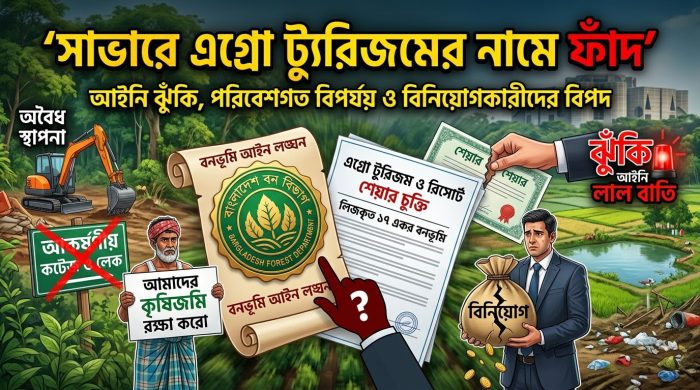
A proposed “Agro-Tourism and Resort” project on around 17 acres of land in Kamalpur, in the Chhoto Kaliakoir area of Savar, has raised questions over the legal status of the land, environmental compliance and the potential risks for prospective investors.
The project, reportedly planned by a group of individuals, has been promoted as an agro-tourism and environmentally friendly investment initiative. However, information available about the project raises concerns that require verification from the relevant government authorities, particularly regarding the use of forest land for commercial purposes.
One of the major concerns is whether the land proposed for the project is legally classified as forest land, including land under the jurisdiction of the Forest Department, and whether it has been lawfully leased or permitted for commercial tourism activities.
Under Bangladesh’s existing legal and administrative framework, the use of government forest land is subject to specific restrictions and approvals. If the land is indeed classified as forest land, the legality of using it for a commercial resort would depend on the terms of any lease, permission or government approval granted for the site.
The terms and conditions of any such agreement therefore need to be examined carefully. If the proposed commercial use is inconsistent with the applicable terms, the project could potentially face cancellation, eviction or other legal action by the authorities.
Another issue involves the reported plan to acquire or use adjoining agricultural land for cottages and other facilities associated with the resort.
Any conversion of agricultural land for non-agricultural purposes must comply with the applicable laws, planning regulations and land-use requirements. The construction of permanent structures on agricultural land without the necessary approvals could create additional legal complications.
Environmental concerns have also been raised because of the project’s proximity to forest areas, agricultural land and water bodies in the Savar region.
A large-scale tourism facility could increase traffic, waste generation, noise and pressure on local natural resources. The potential impact on local biodiversity, wildlife and surrounding agricultural activities would need to be assessed through the appropriate environmental review process.
The proposed investment structure has also raised questions about transparency.
According to information circulated about the project, investment may be collected through the sale of a limited number of shares. However, questions remain regarding the project’s total estimated cost, ownership structure, profit-sharing mechanism, investors’ legal rights and the treatment of investments if the project is unable to continue.
If a significant portion of the project depends on leased government or forest land, investors would not automatically acquire ownership rights over that land merely by purchasing shares in the project.
Consequently, prospective investors would need to examine the project’s incorporation documents, land-related agreements, approvals, financial statements and contractual safeguards before committing funds.
The project has reportedly been promoted partly on the grounds that agro-tourism could generate economic benefits for local farmers and communities.
However, local residents and environmental observers may question whether a commercial resort development would actually benefit the surrounding farming community if agricultural land or common environmental resources are adversely affected.
Increased tourist activity, traffic, construction and commercial operations could also alter the character of the surrounding rural area and affect traditional agricultural activities.
The controversy surrounding the proposed project ultimately depends on the actual legal status of the land and the approvals obtained by the developers.
Before the project proceeds, documents relating to land classification, Forest Department permission or lease agreements, land-use approval, environmental clearance, construction permission and the project’s investment structure should be independently verified by the relevant authorities.
For potential investors, obtaining copies of all relevant approvals and agreements and taking independent legal and financial advice would be important before purchasing any shares or making an investment.
If the project is found to involve unauthorized use of forest land or agricultural land, it could face regulatory action, potentially creating significant financial and legal risks for those involved.
The allegations and concerns surrounding the project should therefore be assessed against official land records, government approvals and environmental documents before any definitive conclusion is reached.