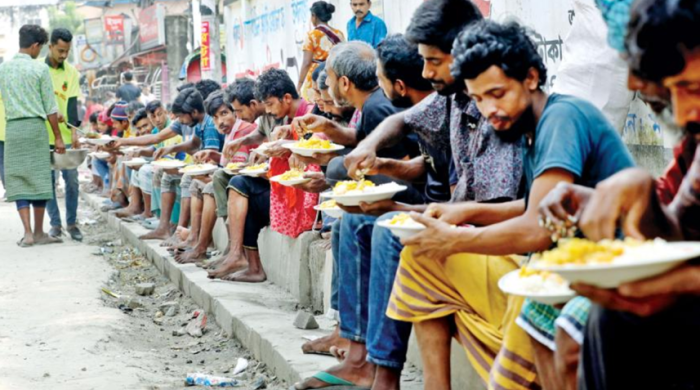
Bangladesh’s progress in reducing hunger has slowed sharply, with its Global Hunger Index (GHI) score improving by just 4 percent since 2018, compared with an improvement of more than 42 percent between 2000 and 2018.The 2026 GHI ranks Bangladesh 84th among 122 countries, with a score of 19.2 — down from 20 in 2018. The country remains in the moderate hunger category.Meanwhile, child wasting rose from 8.4 percent in 2018 to 12.9 percent in the latest assessment, its highest level since 2000, according to the report.
Wasting, measured by low weight relative to height, indicates acute undernutrition and is associated with a higher risk of illness and death among young children.
Other indicators showed improvement. Child stunting declined from 29.8 percent in 2018 to 24 percent in the latest assessment, while the proportion of the population experiencing undernourishment fell from 12.1 percent to 8.2 percent. Under-five mortality also declined, from 3.3 percent to 3 percent.The report describes Bangladesh’s long-term progress as “a generational achievement”.
Child stunting has fallen from 54.9 percent in 2000 to 24 percent in the latest assessment, a reduction of more than 30 percentage points.Studies cited in the GHI attribute the long-term decline in stunting largely to improvements in parental education, particularly maternal education, and household living conditions. Improvements in health, sanitation and demographic conditions have also contributed.In South Asia, India scored 24.1, Pakistan 25.5 and Afghanistan 28.6 — placing all three in the serious hunger category. Nepal scored 14.5 and Sri Lanka 10.2 — both in the moderate category.
South Asia recorded an overall score of 23.5, remaining in the serious hunger category, while the global score stood at 18.1, classified as moderate.
GHI measures hunger through four indicators: undernourishment, child wasting, child stunting and under-five mortality. Lower scores indicate less severe hunger.
Historical comparisons use recalculated data from different reference periods rather than scores published in earlier annual editions. The latest assessment draws on data from different years, including child-wasting estimates for 2021-2025, a 2025 child-stunting survey value, and 2024 under-five mortality figures.