Special Correspondent:
For decades, one of the biggest challenges facing Bangladesh’s sporting sector has been the lack of modern infrastructure. International-standard playing fields, advanced training facilities, gyms and rehabilitation services have remained limited, making it difficult to establish a comprehensive sporting environment for athletes. Against this backdrop, ABG Sports City, located in the Bashundhara Residential Area of Dhaka, is opening new horizons for sports in Bangladesh.
With modern facilities for football, cricket, squash, hockey and several other disciplines, the sprawling sports complex is not only transforming the country’s sporting infrastructure but also reshaping the culture and environment of sports development.
Spread across approximately 300 bighas of land, ABG Sports City represents a significant example of private-sector investment in Bangladesh’s sporting future. The initiative reflects the long-term vision, investment and commitment of Bashundhara Group. Such an integrated sports infrastructure developed by a private corporate entity is relatively rare in South Asia, giving the project a distinctive position in the country’s sporting landscape and creating opportunities to showcase Bangladesh’s capabilities internationally.
Bashundhara Group, which has expanded its business operations since the 1980s while pursuing various social responsibility initiatives, began developing the sports city in 2019. Its objective extends beyond constructing playing fields. The broader vision is to encourage the younger generation to participate in sports, create opportunities for talented athletes to develop their abilities and raise the standard of Bangladesh’s sporting sector to international levels.
To achieve these goals, the group has gradually developed infrastructure for football, cricket and several other sporting disciplines.
ABG Sports City demonstrates how greater private-sector participation can contribute to the development of sports in Bangladesh. Regular sporting activities at its grounds and training facilities are generating fresh interest among young people. At the same time, the project is expanding opportunities to pursue sports as a profession while promoting recreation and a healthy lifestyle.
Such initiatives can also play an important role in encouraging young people to stay away from drug abuse and other negative activities by engaging them in physical exercise, discipline and personal development.
One of the principal attractions of ABG Sports City is Bashundhara Kings Arena, a venue designed to meet the requirements of international football. It has already established an important position in Bangladesh’s sporting landscape.
At a time when the National Stadium in Dhaka was considered unsuitable for hosting international football, Kings Arena emerged as a viable alternative for the country. The venue has hosted FIFA World Cup qualifying home matches, AFC Cup fixtures and South Asian age-group women’s football competitions.
Its emergence has helped reduce the country’s dependence on overseas venues for hosting international football matches and has strengthened Bangladesh’s capacity to stage major sporting events at home.
Another indication of the venue’s international standing came when a technical delegation associated with Brazil’s national football team visited Bangladesh. Ahead of a FIFA international friendly between Brazil and India, a technical team visited Dhaka in August to assess the facilities at the National Stadium and Bashundhara Kings Arena.
The delegation reportedly praised the quality of the playing surface, training ground, players’ gym and recovery facilities at Kings Arena, describing them as meeting international standards. Such feedback represents not only a milestone for the venue but also an encouraging sign for the broader development of sports infrastructure in Bangladesh.
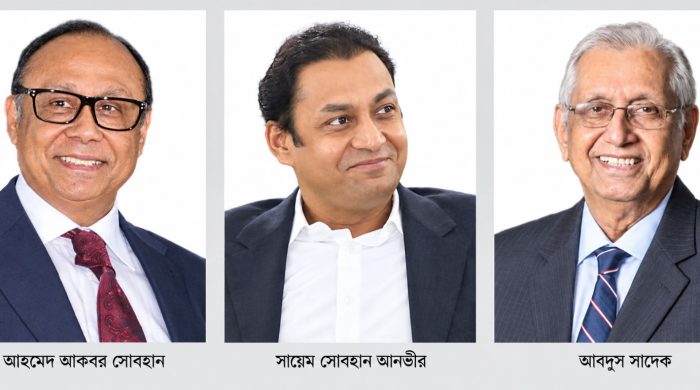
Bashundhara Group Chairman Ahmed Akbar Sobhan has a long-term vision for transforming the country’s sporting landscape. The sports city developed under his initiative places particular emphasis on nurturing the next generation of athletes.
His four sons—Sadat Sobhan Tanvir, Safiat Sobhan Sanvir, Sayem Sobhan Anvir and Safwan Sobhan Tasvir—have also contributed to advancing the initiative through their interest in and support for sports.
Their ambition is not limited to establishing sports facilities and institutions of their own. Rather, they seek to broaden participation in sports and create a more dynamic sporting culture across the country.
ABG Chairman Sayem Sobhan Anvir believes Bangladesh has considerable potential to make progress in football. In a statement published by Kaler Kantho on October 18, 2021, he observed that although football is among the world’s most popular and attractive sports, it had not received the level of attention it deserved in Bangladesh.
He expressed hope that the academy at Bashundhara Sports Complex would eventually produce quality footballers. He also stressed that greater involvement by other business organisations in sports could accelerate the country’s sporting development. Anvir has also expressed his aspiration to see Bangladesh compete on the FIFA World Cup stage.
Legendary hockey player and sports personality Abdus Sadeque has also spoken positively about Bashundhara Group’s contribution to the sector. In comments published by Kaler Kantho on January 12, 2026, he described the group’s development of grounds, stadiums and facilities for different sports as a major step forward.
He highlighted the success of Bashundhara Kings, the group’s interest in cricket, the installation of a hockey turf and initiatives to promote padel tennis in Bangladesh. According to him, the country’s sporting sector would become stronger if more businesses established teams and supported athletes and competitions.
Mohammad Imrul Hasan, director of ABG Sports City, senior vice-president of the Bangladesh Football Federation, president of Bashundhara Kings and deputy managing director of Bashundhara Group, said the chairman and his family were widely known for their passion for sports.
He said their objective was to present Bangladesh positively on the international stage through sports and enhance the country’s global profile. He added that the chairman had consistently supported the development of the sporting sector.
Hasan expressed optimism that the benefits of the initiatives undertaken at ABG Sports City would become increasingly evident over the coming years.
According to him, the development of modern facilities is expanding opportunities for training and competition across different disciplines while creating new employment prospects. The complex is also designed to encourage young people to adopt healthier lifestyles through active participation in sports.
Bashundhara Kings Arena was formally inaugurated by Ahmed Akbar Sobhan on February 17, 2022. On September 3, 2023, the venue hosted its first international match, featuring Afghanistan.
Since then, the arena has expanded its activities through domestic and international football events, strengthening its role as one of the country’s important football venues.
As part of its efforts to develop future generations of footballers, ABG Sports City launched a non-residential football academy on October 5, 2024. Plans are in place to introduce a residential academy once construction of the dormitory is completed.
The academy is expected to provide talented young players with regular training and structured development opportunities, helping them progress towards professional football. In the long term, organisers hope the programme will produce players capable of representing Bangladesh at the national level.
Progress is also being made in cricket. The Bangladesh national team has played an international match against Malaysia at Anvir Cricket Stadium.
The venue has also hosted Premier Cricket League matches, while plans have been considered for staging practice matches ahead of visits by international teams.
Meanwhile, ABG Cricket Network has begun participating in cricket league competitions. Together, these activities are expanding opportunities for training, competitive cricket and player development.
The development of cricket facilities alongside football infrastructure reflects the sports city’s broader ambition to support multiple disciplines rather than concentrate exclusively on a single sport.
ABG Sports City is gradually expanding its activities beyond football and cricket.
Recently, it hosted an international squash competition featuring players from 11 countries, including Bangladesh. The venue also staged the second edition of the international combat sports competition, Zulqarnain Fighting Championship, titled “ZFC-2: Pride of Bangladesh,” with participants from seven countries.
These events are helping introduce a wider range of sporting disciplines to local audiences while creating opportunities for Bangladeshi athletes to compete against international opponents.
The complex has also taken initiatives to promote university-level sports. Football and cricket tournaments involving 10 private universities each have been planned for this month, with further expansion of the competitions envisaged in the future.
The initiative aims to encourage university students to participate regularly in sports while providing a platform for identifying and developing emerging talent.
The installation of an astro-turf facility for hockey is also nearing completion. Once operational, the facility is expected to provide improved conditions for training and competition, potentially creating opportunities to host international hockey matches and tournaments in the future.
The planned expansion of facilities across several disciplines is gradually positioning ABG Sports City as a multidimensional sporting hub.
As part of its future development plans, the complex has decided on names for several important facilities. The cricket stadium will be named Shah Alam Cricket Stadium, the hockey stadium Abdus Sadeque Stadium, and the international-standard swimming pool Abdus Sobhan Swimming Pool.
Naming the cricket and hockey facilities after Shah Alam and Abdus Sadeque will provide an opportunity to recognise figures associated with the country’s sporting heritage.
Abdus Sobhan was the father of Bashundhara Group Chairman Ahmed Akbar Sobhan and one of the first-batch students of the University of Dhaka. He was also a skilled swimmer who competed for the then Bengal team.
Naming the swimming pool after him is intended to honour his sporting background and preserve his association with athletics and swimming.
In addition, ABG Sports City is planning a sports and entertainment festival involving several of the country’s traditional clubs. If implemented, the event could attract greater participation from sports enthusiasts while creating new opportunities for interaction and competition among clubs.
The development of sports in Bangladesh depends on more than individual talent. It requires consistent training, modern infrastructure, professional management, regular competition and long-term financial support.
ABG Sports City is seeking to bring these elements together through its expanding network of venues, training facilities and sporting programmes.
The development of grounds and training centres for different disciplines, the hosting of international competitions, academy-based player development and initiatives to engage young people in sports collectively represent a significant addition to the country’s sporting infrastructure.
As its activities expand, the complex could create further opportunities for emerging athletes, generate sports-related employment and enhance Bangladesh’s visibility in international competitions.
Bashundhara Group’s initiative may also encourage other businesses to invest in sports infrastructure, establish teams and provide sustained sponsorship for athletes and competitions.
If that happens, the significance of ABG Sports City could extend well beyond the boundaries of an individual complex, becoming part of a broader movement to strengthen sports across Bangladesh.
With its emphasis on modern facilities, youth development and international exposure, ABG Sports City has already established itself as a notable part of the country’s sporting journey. Its long-term success will ultimately depend on how effectively its infrastructure translates into sustained athlete development, competitive achievement and wider participation in sports nationwide.