Special Correspondent:
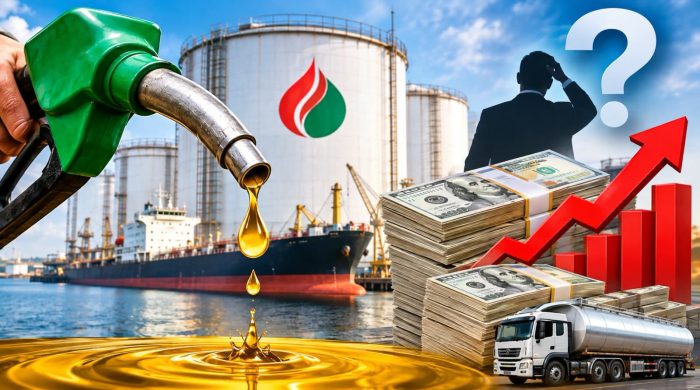
Bangladesh is facing fresh concerns over its fuel supply after several international suppliers expressed their inability to deliver 11 government-to-government (G2G) fuel shipments scheduled to arrive in November, raising questions about alternative procurement arrangements, higher import premiums and the possible influence of local business intermediaries.
Questions have also emerged over the business links of Dr. Ejazur Rahman, who has been described as having close ties to the previous Awami League government, and his alleged connections with several international fuel suppliers through his companies.
Industry insiders fear that delays in scheduled shipments could put pressure on Bangladesh’s fuel supply in December. They have called for an investigation into the reasons behind the suppliers’ inability to deliver, the role of local agents and the decision to award subsequent contracts at higher premiums.
Energy experts say suppliers that fail to meet contractual obligations should be held financially accountable for any losses incurred by the state. Contract termination and blacklisting should also be considered where appropriate.
Alongside concerns over the delayed shipments, questions have been raised over the awarding of contracts to Vitol Asia Pte Ltd for diesel and jet fuel imports at significantly higher premiums.
According to the allegations, the premium under long-term supply contracts was $9.50 per barrel for diesel and $10.15 for jet fuel. In contrast, the premiums awarded to Vitol Asia through an open tender were $16.68 and $17.88 per barrel, respectively.
Under Package-02, Vitol Asia received an award to supply 230,000 tonnes of diesel and 40,000 tonnes of jet fuel.
Calculations cited by relevant sources suggest that the package could cost the state an additional $14.793 million compared with the premiums under long-term contracts. At an exchange rate of Tk123 per US dollar, the additional expenditure would amount to approximately Tk1.82 billion.
Questions have also been raised over whether the procurement process properly followed the decisions and guidelines of the Cabinet Committee on Government Purchase.
In September, the Bangladesh Petroleum Corporation (BPC) finalised a proposal to import 605,000 tonnes of diesel and 90,000 tonnes of jet fuel through an open tender. The proposed premiums were $14.85 per barrel for diesel and $16.49 for jet fuel.
The Cabinet Committee on Government Purchase reportedly declined to approve the proposal because of the high premiums.
Despite that decision, allegations have surfaced that Vitol Asia was subsequently awarded contracts through a restricted or confidential tendering process at even higher premiums.
Stakeholders are questioning why a particular supplier was selected at higher rates when lower-cost supply options were reportedly available.
Dr. Ejazur Rahman’s business involvement in Bangladesh’s fuel import sector has long been a subject of discussion.
According to allegations, six of the 11 international suppliers listed with the BPC have local agents linked to his companies, Seven Mark and TransBangla Commodities Limited.
Sources familiar with the matter claim that some of the November shipments that suppliers subsequently declined to deliver also involved local business connections associated with these companies.
This has prompted calls to investigate whether there is any connection between the failure to deliver the contracted shipments and the subsequent decision to procure replacement supplies at higher premiums.
BPC sources said 11 shipments included in the November G2G procurement schedule had been affected by suppliers’ inability to deliver.
These include three diesel shipments and one jet fuel shipment from Singapore-based Unipec, scheduled for November 19, 21, 22 and 24; a diesel shipment from Indonesia’s PT Bumi Siak Pusako scheduled for November 28; a diesel shipment from PetroChina International scheduled for November 10; and a Mogas shipment from OQ Trading Limited of Oman scheduled for November 23.
The shipments were expected to arrive in Bangladesh during November and were intended to meet part of the country’s December fuel demand.
The key question, according to industry insiders, is why replacement procurement under alternative arrangements is being conducted at higher premiums when suppliers have failed to fulfil their G2G contractual commitments.
Stakeholders have called for scrutiny of the roles played by the BPC Director (Operations) and certain officials of the Ministry of Power, Energy and Mineral Resources.
They allege that lower-priced suppliers could have been selected from the list of interested companies under the Direct Procurement Method (DPM), but instead contracts were awarded through open tenders at higher premiums.
There are also calls to investigate whether the additional expenditure involved any financial arrangements or opportunities for illicit transfers of money abroad.
According to BPC data, contracts were awarded for the import of a total of 5.51 million tonnes of refined petroleum products during the 2025-26 fiscal year through G2G arrangements and open tenders.
Of this volume, approximately 4.3 million tonnes were awarded to companies whose local representatives or business connections are allegedly linked to Dr. Ejazur Rahman’s companies.
Sources further allege that companies associated with Rahman secured approximately 78 per cent of the total contracts during the fiscal year.
Concerns have also been raised over tender conditions that allegedly favour a limited number of suppliers, restricting market access for new companies and increasing the influence of a particular business group in the country’s fuel import sector.
Documents relating to tenders for the June-August period reportedly show a similar pattern.
During that period, the BPC initiated procurement of between 925,000 and 1.15 million tonnes of refined petroleum products through four packages over three months.
Under Package PG-1, Unipec Singapore received the contract to supply between 320,000 and 390,000 tonnes of diesel and 70,000 to 90,000 tonnes of jet fuel.
Under PG-2, Vitol Asia was awarded a contract to supply between 300,000 and 340,000 tonnes of diesel and 60,000 to 80,000 tonnes of jet fuel.
Trafigura secured the PG-3 contract to supply between 150,000 and 200,000 tonnes of furnace oil.
Vitol Asia also received the PG-4 contract to supply between 25,000 and 50,000 tonnes of octane.
Following the change of government, Bangladesh also recorded substantial savings by reducing premiums on fuel imports under G2G arrangements.
Former BPC Chairman Md Amin Ul Ahsan said the corporation saved approximately $42 million over the six-month period from July to December 2025 by negotiating lower premiums for G2G fuel imports.
He said that when he assumed office, premiums under G2G arrangements were found to be $2 to $2.50 per barrel higher than those offered through open tenders.
Following negotiations with suppliers, the BPC introduced a condition requiring G2G suppliers to offer premiums at least one cent lower than those available through open tenders.
The move resulted in savings of $42 million for the corporation over six months, he said.
Asked whether there could be a conspiracy behind the fuel supply disruptions, BPC Chairman Dr. Rafiqul Islam said he did not believe there was any such possibility, although the matter would be examined.
“I do not think there could be any kind of conspiracy. Nevertheless, I will look into the matter,” he said.
Asked why companies allegedly linked to Dr. Ejazur Rahman had received procurement contracts, the BPC chairman said the corporation could not award contracts to companies outside its approved supplier list.
He added that the BPC had invited tenders to enlist new suppliers and that additional companies could be included in the list in the future.
Professor M. Shamsul Alam, energy adviser to the Consumers Association of Bangladesh (CAB), said developments surrounding fuel procurement suggested the possible influence of syndicates at different levels of the process.
He said suppliers that failed to deliver shipments in accordance with contractual obligations should be required to compensate the state for the resulting financial losses. Blacklisting such companies should also be considered where necessary.
According to the BPC’s latest information, 11 foreign companies are currently enlisted as suppliers of petroleum products to Bangladesh.
They are Unipec Singapore Pte Ltd; PT Bumi Siak Pusako (BSP)-Japan Indonesia; Petco Trading Labuan Company Limited (PTLCL), Malaysia; PTT International Trading Pte Ltd, Thailand; OQ Trading Limited, Oman; PetroChina International (Singapore) Pte Ltd; Emirates National Oil Company (ENOC); Indian Oil Corporation Limited (IOCL); Numaligarh Refinery Limited (NRL); Vitol Asia Pte Ltd; and Sinochem International Oil (Singapore) Pte Ltd.
These companies supply refined petroleum products to the BPC through G2G arrangements and open tenders.
Sources also said the BPC’s liaison office is located on the 10th floor of the BTMC Building in Karwan Bazar, Dhaka, while the offices of TransBangla Commodities and Seven Mark are located on the eighth and seventh floors of the same building, respectively.
Repeated attempts were made to contact Dr. Ejazur Rahman by mobile phone to obtain his comments on the allegations concerning fuel supply disruptions and the awarding of contracts at higher premiums. However, he could not be reached, and no response was available through other channels.
The central question now is whether there is any connection between the failure of suppliers to deliver the scheduled November shipments and the subsequent decision to procure replacement fuel at significantly higher premiums.
Stakeholders are also demanding accountability for the potential additional expenditure and greater transparency in Bangladesh’s fuel import procurement process.
The authorities’ response to these allegations, and whether an independent investigation will be initiated into the procurement decisions and the role of local business intermediaries, will be crucial in determining the extent of the controversy.