Dhaka, one of the world’s fastest-growing megacities, is facing mounting pressure from rapid urbanization, weak civic management, and severe shortages of public spaces and essential services, according to a recent commentary by journalist and columnist Rajan Bhattacharya.
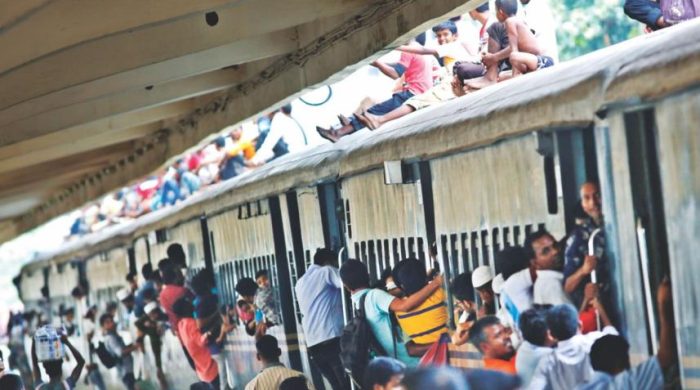
The article paints a troubling picture of Bangladesh’s capital, where overcrowding, traffic congestion, pollution, waterlogging, illegal occupation of public spaces, and deteriorating civic services have made daily life increasingly difficult for residents.
The writer compares the current state of Dhaka to a fictional royal inspection, where city officials finally realize that the once-livable city has become unfit for habitation after years of negligence and “sleeping on duty.”
According to the report, Dhaka lacks adequate urban planning despite decades of expansion. Residential buildings are constructed without sufficient space for light and air, roads remain narrow and broken, and illegal encroachments continue across footpaths, canals, playgrounds, and public lands.
The article highlights that 41 wards in Dhaka reportedly have no playgrounds at all. Of the city’s 235 playgrounds, 193 are allegedly under illegal occupation. The World Health Organization recommends at least 9 square meters of open space per person in urban areas, but Dhaka residents reportedly have less than 1 square meter.
Concerns were also raised over the disappearance of canals and rivers surrounding the city. A 2020 survey by the River and Delta Research Centre found that 37 out of 73 canals in Dhaka had been encroached upon. Environmental degradation, air pollution, and the lack of green spaces have further worsened living conditions.
The commentary criticizes both the Dhaka North City Corporation and Dhaka South City Corporation for failing to improve services despite administrative expansion and increased revenue collection through holding taxes and trade licenses.Traffic congestion remains another major concern. The article notes that over 2.3 million registered vehicles currently operate in Dhaka, while public transportation remains inadequate. Illegal and unregulated vehicles continue to dominate city roads, contributing to severe traffic jams and unsafe commuting conditions.
The writer also points to persistent failures in waste management, mosquito control, drainage systems, healthcare services, and public safety. Despite spending billions of taka on waterlogging mitigation projects over the past decade, residents continue to suffer during heavy rainfall.
Citing projections from the United Nations’ World Urbanization Prospects report, the article warns that Dhaka’s population could exceed 52 million by 2050, potentially making it the world’s most densely populated city if current urban migration trends continue.
The commentary calls for urgent reforms, including planned housing, improved public transportation, preservation of open spaces and water bodies, digital civic services, stronger environmental protections, and citizen-centered urban governance.
The article concludes by warning that a city cannot remain livable if its administrators prioritize revenue generation over public service, emphasizing that “an unhappy city can never create happy citizens.”
Writer:Rajan Bhattacharya,journalists & columnist