Staff Reporter:
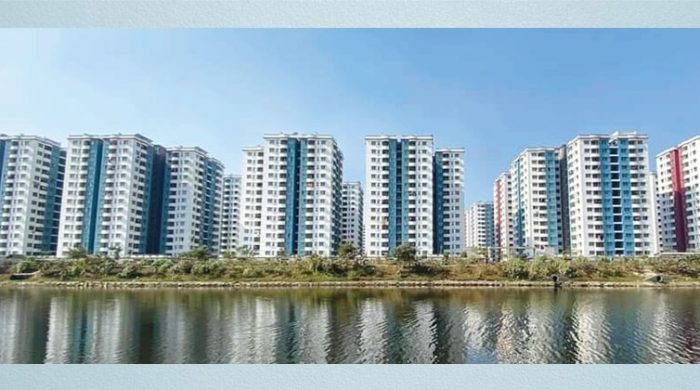
Bangladesh’s housing sector is going through a severe downturn, with apartment sales falling sharply and developers struggling to survive amid rising construction costs, high bank interest rates, inflation, and economic uncertainty.
According to the Real Estate and Housing Association of Bangladesh (REHAB), monthly flat sales, which once averaged around 1,000 units, have now dropped to only 250–300 units. The luxury apartment market in areas such as Gulshan, Banani, Bashundhara Residential Area and Dhanmondi has been hit the hardest, with sales declining by as much as 60–70 percent.Industry insiders say prices of construction materials including rods, cement, bricks, sand, tiles, and stone have increased by nearly 30 percent over the past few years, significantly raising the cost of apartment construction. As a result, many middle-class buyers are stepping away from the housing market.
Developers are also facing difficulties due to reduced Floor Area Ratio (FAR), which limits the number of floors allowed in new buildings. Landowners are reportedly becoming less interested in signing agreements with real estate companies under the current market conditions.
A visit to construction material markets in areas such as Banglamotor, Mirpur and Badda found a sharp decline in customer activity. Traders said sales have fallen by nearly half over the past two years.
A tile trader at Banglamotor market said that while daily sales once reached several hundred thousand taka, some days now end with sales below Tk 50,000, making it difficult to cover bank loan installments, warehouse rent, and workers’ salaries.
REHAB Senior Vice President Abdur Razzaq said the entire housing industry is currently under heavy pressure, with new project launches also declining. He noted that rising bank loan interest rates have made business operations increasingly difficult for developers.
The cement and steel industries, which are heavily dependent on the real estate sector, are also experiencing major setbacks. Bangladesh Cement Manufacturers Association President Md. Amirul Haque said the cement industry is facing a significant slump, with a large portion of production capacity remaining unused due to weak demand.
Meanwhile, Almas Shimul, Additional Managing Director of GPH Ispat, said the slowdown in the housing sector has drastically reduced demand for steel rods, forcing companies to cut production.Industry stakeholders estimate that nearly 20 million people are directly and indirectly employed through the housing sector, which is also linked to more than 169 backward linkage industries. They warn that a prolonged recession in the sector could negatively impact the country’s overall economy.
According to data from Bangladesh Bank, home loan interest rates increased from 9 percent in 2022 to 17 percent in 2024, and currently remain around 14 percent. Bankers say high interest rates are discouraging middle-income buyers from taking home loans.Managing Director of Mutual Trust Bank PLC, Syed Mahbubur Rahman, said Bangladesh still lacks a specialized long-term financing system for the housing sector. He suggested that the government could help revive the industry by introducing long-term home loans at lower interest rates.
Experts say the housing sector is one of the key drivers of Bangladesh’s economy, contributing to employment generation, industrial production, and government revenue. They warn that without urgent policy support, tax incentives, and easier financing facilities, the crisis could deepen further.