By Special Correspondent
Some phrases transcend their literal meaning and come to symbolize an era, a mindset, and a nation’s collective memory. One such phrase, widely attributed to Pakistani Major General Rao Farman Ali—”The green of East Pakistan must be turned red”—has become synonymous with the brutality unleashed during Bangladesh’s 1971 Liberation War. While historians continue to debate the exact origin and wording of the statement, there is little disagreement that it represents the military’s campaign of repression and mass violence against the people of East Pakistan.
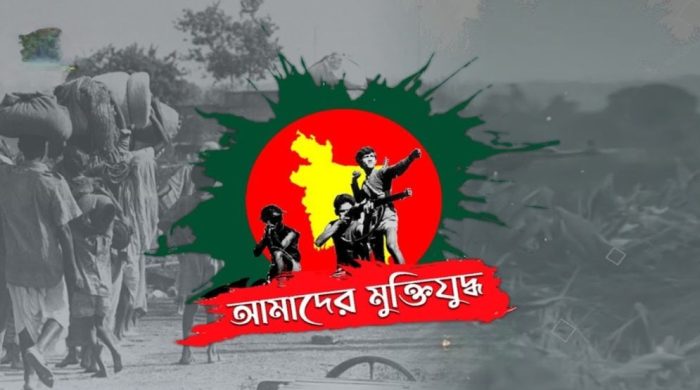
For Bangladesh, 1971 was not merely a year of war; it was a profound humanitarian catastrophe. The country’s green landscape was stained with the blood of students, teachers, farmers, workers, intellectuals, political activists, and countless innocent civilians. The refusal to accept a democratic electoral mandate ultimately pushed an entire nation into an armed struggle for independence.
The crisis began after the Awami League secured an overwhelming victory in Pakistan’s 1970 general election. Under democratic principles, the party was expected to form the government. Instead, Pakistan’s military leadership suspended the National Assembly and abandoned the path of political dialogue. The situation reached its darkest moment on the night of March 25, 1971, when the Pakistan Army launched Operation Searchlight, one of the most devastating military crackdowns in South Asian history.
From the outset, civilians, political activists, educational institutions, and cultural centers became primary targets. The massacre at the University of Dhaka remains one of the most infamous examples of the operation’s brutality. Teachers, students, police personnel, intellectuals, and ordinary citizens were killed indiscriminately. Across the country, villages were destroyed, homes burned, and widespread atrocities forced millions of people to flee as refugees.
The Pakistan Army did not act alone. It was assisted by auxiliary militias, including the Razakar, Al-Badr, and Al-Shams forces. Historical research and documentary evidence indicate that many members associated with Jamaat-e-Islami and its then student wing, Islami Chhatra Sangha, participated in these groups. Jamaat-e-Islami opposed Bangladesh’s independence during the war and supported the territorial unity of Pakistan. The coordinated actions of the military and its local collaborators left deep and lasting scars on Bangladesh’s national consciousness.
Beyond providing military assistance, these auxiliary forces reportedly gathered intelligence, identified pro-independence activists, and targeted minority communities. Their alleged involvement in the systematic abduction and killing of Bengali intellectuals during the final days of the war remains one of the darkest chapters in Bangladesh’s history. The murders of professors, physicians, journalists, and academics were widely seen as an attempt to cripple the intellectual foundation of the emerging nation.
For Bangladeshis, the Liberation War is more than a historical event—it is an integral part of the nation’s identity, collective memory, and shared sacrifice. It serves as a reminder of the immense price paid for independence.
Yet the lessons of 1971 extend beyond the battlefield. At its core, the Liberation War was a struggle for democracy, political legitimacy, cultural identity, and the recognition of the people’s democratic rights. Bangladesh was born from the conviction that governmental authority must derive from the will of the people.
For this reason, the ideals of the Liberation War cannot belong exclusively to any single generation or political party. The legitimacy of any government ultimately rests on public consent—one of the war’s most enduring democratic lessons.
Since independence, however, Bangladesh’s democratic journey has not always reflected these ideals. Successive governments have faced criticism over the weakening of state institutions, the concentration of executive power, restrictions on political competition, and concerns regarding accountability.
The Awami League’s historic leadership during the Liberation War remains an inseparable part of Bangladesh’s history. Nevertheless, historical contributions do not place any political party beyond democratic scrutiny. Critics argue that during different periods of Awami League rule, opposition politics narrowed, sections of the media and civil society faced growing constraints, institutional checks and balances weakened, and questions arose over the credibility of elections.
Such criticism should not be interpreted as opposition to the spirit of the Liberation War. Rather, it reflects the belief that the democratic values upon which Bangladesh was founded should apply equally to every government. The Liberation War did not grant permanent political authority to any party; instead, it established the moral foundation for ensuring government accountability to the people.
In this context, the mass uprising of July 2024 also deserves careful historical examination. Like many popular movements throughout history, various political actors have sought to interpret the events through their own perspectives and emphasize their respective contributions. However, no single political force can legitimately claim exclusive ownership of a mass movement.
The true strength of any popular uprising lies in the participation of ordinary citizens—students, workers, professionals, families, and people from all walks of life. The lasting significance of the July movement will therefore be measured not by political narratives, but by whether it strengthened democratic institutions, protected civil liberties, enhanced accountability, and expanded freedom of expression.
Remembering the role of political forces that opposed Bangladesh’s independence also remains important. A democratic society cannot move forward by ignoring its history. At the same time, democracy is sustained not only through historical remembrance but also through strong institutions, the rule of law, free expression, and credible elections.
Protecting the spirit of Bangladesh’s independence does not require the permanent exclusion of political opponents. Rather, it demands the creation of a confident democratic culture in which differences of opinion are regarded as a natural feature of democracy rather than as acts of hostility.
Bangladesh’s state-building journey presents a striking paradox. A nation that fought authoritarianism to achieve independence has repeatedly found itself confronting authoritarian tendencies in the decades that followed. Even political forces that emerged from struggles for democratic rights have, at times, faced criticism for allegedly restricting those very freedoms.
Perhaps this is one of the enduring realities of nation-building. Independence is not the end of history but the beginning of a continuous democratic responsibility. Every generation must decide whether it will uphold the founding principles of the state or drift away from them.
The authenticity of the statement attributed to Rao Farman Ali may continue to be debated by historians. Yet there is little ambiguity about the central lesson of 1971: when governments reject the democratic will of the people and replace dialogue with coercion, nations move toward tragedy.
Bangladesh’s future should never follow that path. The true legacy of the Liberation War lies not in the dominance of any political party but in safeguarding the freedom, dignity, and rights of every citizen. The purpose of the state is not to silence its people, but to serve them.
The green land of Bangladesh belongs to all its citizens. Protecting that legacy requires more than remembering the sacrifices of the past—it demands an unwavering commitment to democracy, justice, human rights, and public accountability. Only by upholding these values can the nation truly honor those who gave their lives for an independent Bangladesh and fulfill the promise of a state founded on the sovereignty and rights of its people.