Bangladesh’s real estate sector has urged the government to provide policy and financial support to help the industry survive what it described as a deepening crisis, citing soaring construction costs, high bank lending rates, increased taxes and regulatory challenges.
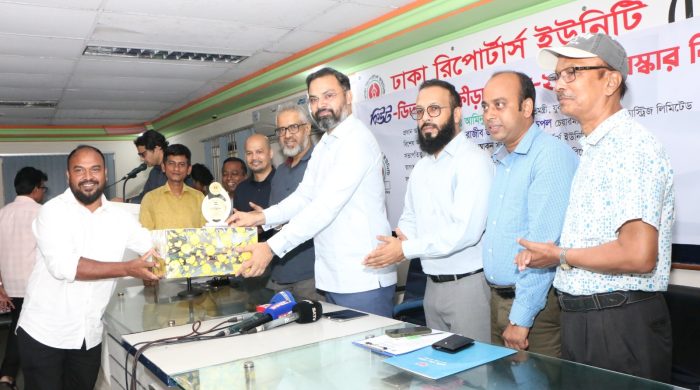
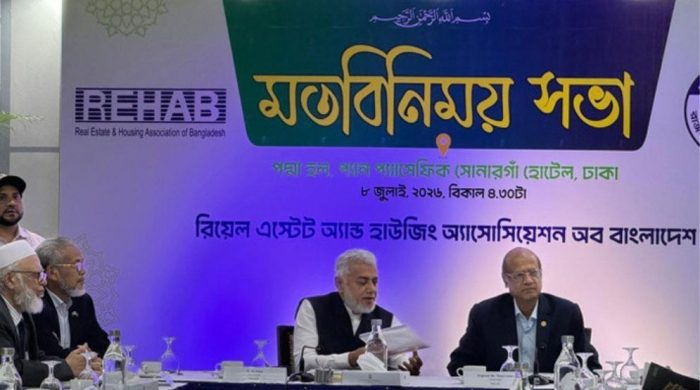
The demands were made by the Real Estate and Housing Association of Bangladesh (REHAB) during a high-level meeting with the Rajdhani Unnayan Kartripakkha (RAJUK) at the Pan Pacific Sonargaon Hotel in Dhaka on Wednesday (8 July).
Speaking at the meeting, REHAB President Dr Ali Afzal said the housing sector and its related industries contribute around 15% to the country’s gross domestic product (GDP), while directly and indirectly supporting the livelihoods of nearly five million people and more than 265 allied industries.
He said apartment sales have fallen by around 62%, placing the sector under severe strain.
According to REHAB, construction costs have risen by 43 to 44% due to global economic conditions, higher prices of construction materials and increased taxes introduced in the latest national budget.
Dr Afzal said no industry could remain viable while borrowing at interest rates of 17 to 18%.
The association called for the introduction of long-term, low-interest housing loans, the creation of a Tk100 billion refinancing fund for the housing sector and tax policy support to stimulate investment.
REHAB also urged the government to offer incentives for planned housing development in district and upazila towns to encourage decentralised urbanisation.
The association further sought revisions to the Detailed Area Plan (DAP)-2025 and the Dhaka Metropolitan Building Rules-2025, arguing that several provisions remain unclear and could complicate project implementation.
According to REHAB, ambiguities exist in regulations covering floor area ratio (FAR), setbacks, the number of units permitted on small plots, sewage treatment plants (STPs), green buildings, transit-oriented development (TOD), transferable development rights (TDR), parking, mixed-use developments and planning approvals.
The association also called for shared-equity housing businesses operating outside the registration and tax framework to be brought under an appropriate legal and regulatory regime.
RAJUK Chairman Engineer Md Riazul Islam said the authority’s objective was not to harass developers but to ensure safe, orderly and planned urban development.
He said initiatives were underway to reduce the building plan approval period to 30 working days and gradually digitise all RAJUK services.
He also revealed that a new policy was being drafted to regulate shared-equity housing businesses.
Regarding existing buildings, the RAJUK chief said structures with technically rectifiable defects may be considered for regularisation under certain conditions. However, he stressed that there would be no compromise on fire safety, parking requirements or structural integrity.
Both sides agreed to work jointly to address the challenges facing the housing sector, promote planned urban development and review technical aspects of the DAP and building regulations. They also decided to hold a detailed technical workshop in the near future.