Thanks to the BNP government led by Tarique Rahman. The government has finally taken steps to amend the law to combat cyberterrorism. The government is set to amend the “Cyber Security Act” once again. By incorporating new clauses, the law is being made stricter while penalties are also being increased. In the proposed amended law, four terms – rumours, disinformation, harassment, and defamation – have been brought under the definition of criminal offences to bring the accused to justice. Furthermore, alongside law enforcement agencies, the Ministry of Information and Broadcasting and other authorised agencies are being involved in the implementation process of the law. According to sources in the Information and Communication Technology Division, the amended law may be passed in the upcoming session of Parliament.
A new section (26/A) added to the amended law states that if any person publishes or propagates rumours and disinformation in cyberspace, it will be considered an offence. Anyone committing such an offence will face imprisonment for a term not exceeding 10 years, a fine not exceeding Tk40 lakh, or both.
The draft of the amended law defines rumours. It states that a rumour means any unconfirmed or unverified information, news, or claim that creates or risks creating confusion, panic, tension, or social unrest in the public mind.
Disinformation is defined as any false, distorted, or misleading information intentionally published or propagated with the intent to mislead, deceive, or harm an individual, the public, an institution, or the state. Strict penal provisions are being included to curb false campaigns carried out using artificial intelligence (AI) technology through fake videos, audio, and misleading pictures.
Two new terms are being added to Section 25 of the amended law. Regarding crimes and penalties related to defamation and harassment, it states that if any person publishes or propagates any information, audio, video, audio-visual image, still image, graphics, edited material through other means, or content created by AI to defame or harass someone, it will be deemed an offence. A provision of five years’ imprisonment, a fine not exceeding Tk20 lakh, or both, is being kept for this crime.
If anything defamatory or harassing is propagated against a woman or a person under 18 years of age, the offender will face imprisonment for a term not exceeding 10 years, a fine not exceeding Tk40 lakh, or both. Section 499 of the Penal Code has been cited for the explanation of defamation.
If this section is incorporated, it will be an effective step in establishing the rights of the general public. The home minister and the law minister certainly deserve praise for taking such an initiative.
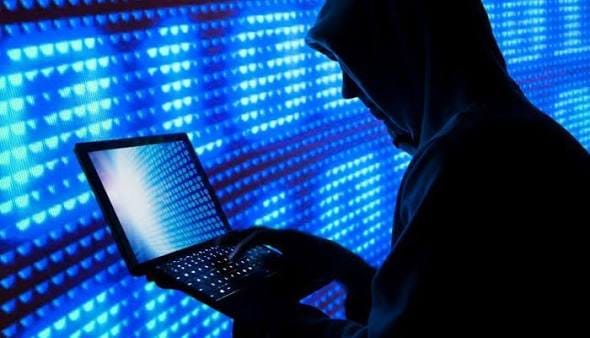
The misuse of social media is now considered a major threat not only to victims but to society and the state as a whole. Uncontrolled social media is harmful to any society. Social media has now turned into a medium for attacking others with filthy, ugly, and obscene language to humiliate them, rather than a means of mutual communication. Here, the primary work of a section of perverted minds is character assassination, blackmailing, and extortion. Due to social media, a kind of anarchy and lawlessness prevails throughout society. Various countries across the world have enacted laws to prevent the harmful use of social media, thereby ensuring the safety of their citizens. However, Bangladesh lacks effective laws to curb the arbitrariness of social media. The National Parliament passed the Cyber Security Act 2026 on 10 April during its first session. But this law was incomplete. It was not only inadequate but also ineffective in preventing cyberbullying and falsehoods on social media. As a result, cybercriminals are becoming increasingly rogue, engaging in character assassination without hindrance. In reality, the government’s initiative to enact new legislation is undoubtedly a bold step that will hopefully bring cybercriminals under control to some extent.
Social media has effectively become a parallel government, influencing various official decisions. Politicians, bureaucrats, police officers, teachers, and businesspeople are all unsettled by this panic. Spreaders of rumours and disinformation are embarrassing the government and tarnishing its image.
An organised syndicate operating from abroad is targeting businesspeople, industrialists, and entrepreneurs through social media, demanding large sums of money. If the money is not paid, coordinated attacks begin. By continuously broadcasting untrue and baseless content against them, these perpetrators try to humiliate them socially and mentally, ultimately demanding large sums in extortion. Many panicked businesspeople surrender helplessly to these cyber extortionists to save their honour. Meanwhile, those who are honest and brave refuse to submit to injustice, though they pay a heavy price for it. Despite having laws and courts in the country, cybercriminals seem to operate above the law. Victims of these cybercrimes do not receive legal redress. Police stations and law enforcement branches hesitate to accept cases or conduct investigations out of fear of cybercriminals’ wrath. Courts and judges also appear helpless against disinformation, rumours, and cyberbullying. Judges fear taking up cases against cybercriminals, and the government lacks the courage to act against them. They have become so reckless that they no longer fear spreading distasteful and heinous content against the head of government and the head of government’s family, posing a massive threat to state governance.
Social media is now the biggest enemy of social security – a silent killer. Due to cyberbullying, many people are taking their own lives, lives are being shattered, and countless individuals are being deceived. Yet, there are no adequate laws to prevent this, making social media platforms a major cause of public panic. Uncontrolled social media is driving some individuals toward violence. Previously, people hired terrorists or thugs to intimidate opponents, relying on muscle power to suppress dissent. Now, cyberterrorists are in higher demand than armed thugs. No one hires musclemen to ruin opponents anymore; they hire cyberterrorists. Acid is no longer thrown to harass women; instead, they are attacked with vile language on Facebook or YouTube.
Research indicates that 90% of female social media users in Bangladesh fall victim to cyberbullying. According to police estimates, 132 women committed suicide between June of last year and June of this year due to cyberbullying, unable to tolerate obscene and vulgar attacks. Yet, no action was taken against those who insulted these women online. This is how the terrorism of rumours and falsehoods persists on social media.
Harassing women is not the only work of cybercriminals. They are not sparing minority communities, shrines, or religious sites—even sensitive topics like the Liberation War are targeted with false information. Such actions fuel fear, anger, and distrust among people, which can ultimately lead to severe societal problems.
Is spreading distorted pictures and running targeted smear campaigns really a part of freedom of expression?
Article 19 of the Universal Declaration of Human Rights states that everyone has the right to freedom of opinion and expression (UDHR, 1948, Article 19). Put simply, expressing what you think or say is your fundamental right.
However, it does not end there. Article 19(3) of the International Covenant on Civil and Political Rights states that the exercise of these rights carries special duties and responsibilities. It may, therefore, be subject to certain restrictions provided by law – if necessary to respect the rights or reputations of others, or for the protection of national security, public order, public health, or morals (ICCPR, 1966). Simply put, you have the right to freedom of expression, but saying “whatever you want” does not fall under it.
During World War II, Germany’s Nazi forces spread false propaganda to paint an entire population as the enemy. It was after that horrific experience that an international consensus emerged: people must be given the right to speak, but that right must not be used to spread hatred or destruction.
In today’s reality, especially in the era of social media, that same risk has re-emerged in a new form. The only difference is that while propaganda previously took time to spread, it now reaches millions within minutes.
Keeping this reality in mind, the European Union introduced the Digital Services Act 2022, obligating major social media platforms to work actively to reduce the risks of fake news, hate speech, and social harm (European Union, 2022, Arts. 34–35).
Not just the European Union, but various countries including the United States, Canada, and Australia have enacted strict laws to halt bullying, falsehoods, and hate propaganda in cyberspace. However, in Bangladesh, cybercriminals have remained outside the reach of justice. Therefore, the initiative to amend the Cyber Security Act after reviewing foreign laws is the need of the hour. The government’s push to curb social media anarchy and arbitrariness within the shortest possible time demonstrates its accountability to the public. Without ensuring citizens’ security in the cyber world, democracy, human rights, and the rule of law cannot be established. For this reason, this government initiative represents a landmark step in protecting civic rights.