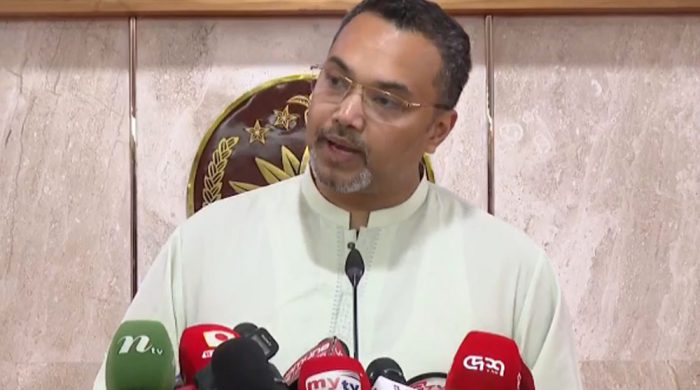
The government plans to make education free and compulsory for children aged four to 13, extending primary education up to class eight in phases, State Minister for Primary and Mass Education Bobby Hajjaj said today.
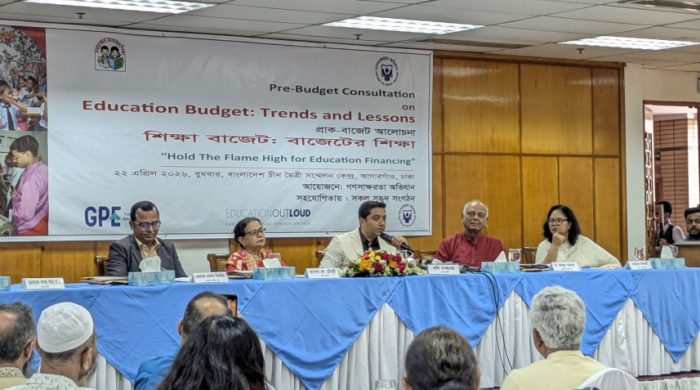
Speaking at a pre-budget consultation titled “Education Budget: Trends and Lessons” at the Bangladesh-China Friendship Conference Centre in the capital, Bobby Hajjaj said the plan would bring two years of pre-primary education and schooling up to class eight under a unified framework.
“Our promise to the people is age four to 13. Four and five are pre-primary, six to 10 are primary, and 10 to 13 would take it up to class eight. We want to make education for them compulsory,” he said.
The event was organised by the Campaign for Popular Education (CAMPE).
Bobby Hajjaj said the government was moving towards career-oriented, skill-based education so that students are better prepared for work at whichever stage they complete their studies. The broader aim, he said, is to ensure education contributes directly to future livelihoods.
He added that a new primary curriculum was being developed around learning through play and storytelling.
The state minister said the ministry was grappling with structural problems in primary education, including shortages of support staff, encroachment on school property, and delays in teacher recruitment.
More than 65,000 primary schools do not have guards or cleaners, he said, while land and parts of school buildings are being grabbed in some areas.
On recruitment, Bobby Hajjaj said more than 1.06 lakh teacher posts were stuck in court cases, while over 32,000 head teacher posts were also tied up in litigation. Another 14,000-plus recruits appointed through a process initiated during the interim government could not yet be placed as their recruitment process is still under verification.
He said financial support would be essential to keep children from low-income families in school. Without cash incentives, many poor families would continue to send children to work instead of school, he said, adding that support should reflect differing household realities.
Bobby Hajjaj also highlighted the government’s midday meal programme, saying it was being expanded in phases and would eventually cover all primary students.
The programme is now being implemented on a pilot basis in 151 upazilas and will be expanded nationwide within the next year, he said.
Students are being provided not only with fortified biscuits but also a broader food basket, including milk, eggs, and bananas on different days. The menu has been designed to maintain roughly similar nutritional value each day, with support from the World Food Programme and nutrition specialists at Dhaka University.
The state minister said the government also aims to introduce hot cooked meals in future, although scaling such a programme from a limited number of schools to more than 65,000 nationwide remains a major challenge.
Professor Emeritus Manzoor Ahmed and State Minister for Planning Zonayed Abdur Rahim Saki were also present, while CAMPE Executive Director Rasheda K Choudhury moderated the event.