Special Correspondent:
How long can an international agreement remain durable? And when the fundamental nature of relations between two countries changes, can the benefits of such an agreement continue unchanged?
Those questions are now at the centre of a growing dispute over the 66-year-old Indus Waters Treaty between India and Pakistan.
The latest crisis began after the April 22, 2025, terrorist attack in Pahalgam, Jammu and Kashmir, in which 26 people were killed. India blamed Pakistan-based militants for the attack. In response, New Delhi announced that the Indus Waters Treaty would remain in abeyance until Pakistan credibly and irrevocably ends what India describes as its support for cross-border terrorism.
India’s decision has significance far beyond the issue of water sharing. It signals that New Delhi no longer wants to view security relations with Pakistan as entirely separate from other areas of bilateral cooperation.
The dispute has now moved into the realm of international law as well.
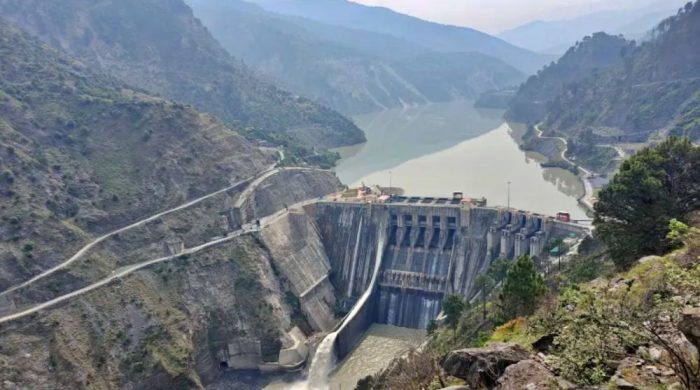
On August 31, 2026, an international arbitration tribunal constituted under the treaty, following an application by Pakistan, ruled that the Indus Waters Treaty remains in force. The tribunal also held that India’s unilateral decision could not suspend or terminate the treaty. It imposed certain interim restrictions related to India’s Ratle hydropower project.
Pakistan welcomed the ruling, while India rejected it.
New Delhi has maintained that it does not recognise the arbitration process and therefore does not accept the tribunal’s jurisdiction to rule on what India considers a sovereign decision.
The dispute over the Indus Waters Treaty has consequently evolved into something much broader than a disagreement over water allocation or the construction of hydropower projects. It now involves international law, national security and the deepening crisis of trust between the two nuclear-armed neighbours.
A Treaty That Survived Wars
The Indus Waters Treaty was signed in 1960 with the World Bank playing a key mediating role. Under the agreement, Pakistan received the principal rights over the waters of the western rivers—the Indus, Jhelum and Chenab—while India was given greater rights over the eastern rivers—the Ravi, Beas and Sutlej.
At the same time, both countries were allowed to use waters of rivers allocated primarily to the other side, subject to specific conditions set out in the treaty.
The agreement survived several wars, military confrontations and prolonged periods of political hostility between India and Pakistan. For decades, it was regarded internationally as one of the more successful examples of water cooperation between two adversarial states.
But the circumstances surrounding the treaty have changed considerably.
Both countries have larger populations and growing water demands. Climate change is also putting additional pressure on water resources. At the same time, the security relationship between India and Pakistan has become increasingly complicated.
Security and Water No Longer Separate
At first glance, India’s decision may appear to be a direct response to a terrorist attack. But New Delhi’s argument is broader.
India has for years accused Pakistan-based militant groups of carrying out attacks on Indian soil. Major incidents in Mumbai, Uri, Pulwama and, most recently, Pahalgam have repeatedly pushed bilateral relations into crisis.
Pakistan has consistently rejected India’s allegations.
From India’s perspective, however, the Pahalgam attack was not an isolated incident but part of a continuing security challenge. That has prompted New Delhi to reconsider its long-standing approach of keeping issues such as water, trade and other forms of bilateral cooperation separate from security disputes.
There is, nevertheless, an important legal distinction.
A terrorist attack does not automatically provide a state with a legal right to terminate an international treaty. India itself has not described its action as a permanent termination. Instead, it has referred to the treaty being held in abeyance.
That distinction leaves open the possibility that cooperation could eventually resume if circumstances change.
What Does International Law Say?
One of the fundamental principles of international law is that treaties must be respected and performed by the states that have entered into them. This principle is considered essential to maintaining stability and predictability in international relations.