The government will no longer treat the education budget as a mere cost but as the “first investment of the state”, State Minister for Education Bobby Hajjaj said today.Education will be the state’s first investment, the core factory of human resources, and the principal project of nation-building,” he said while unveiling a 12-point policy agenda at a press conference at the Ministry of Education in the Secretariat around 12:30pm.Bobby Hajjaj said he and Education Minister ANM Ehsanul Hoque Milon were delivering a clear message under Prime Minister Tarique Rahman’s leadership that education would be placed at the centre of nation-building.The state minister said the government was committed to raising the allocation for education to 5 percent of GDP, fulfilling an electoral pledge.
Home
বাংলা
Editor’s Pick
The new prime minister faces tough tests ahead
19 February 2026, 01:01 AM
Views
Decisive action is needed to deliver on education pledges
19 February 2026, 00:51 AM
Views
Legal fights heat up in telecom sector
19 February 2026, 00:00 AM
Economy
Deregulation necessary to rebuild state institutions
19 February 2026, 00:00 AM
Economy
A six-point strategic memo to the new government
18 February 2026, 00:16 AM
Views
Govt to prioritise education as ‘first investment’: Bobby Hajjaj
State minister unveils 12-point policy agenda to transform learning
17 MIN(s) ago
UPDATED 12 MIN(s) ago
NEWS
SHARE
Star Online Report
BobbyHajjaj_19Feb.jpg
Photo: Star
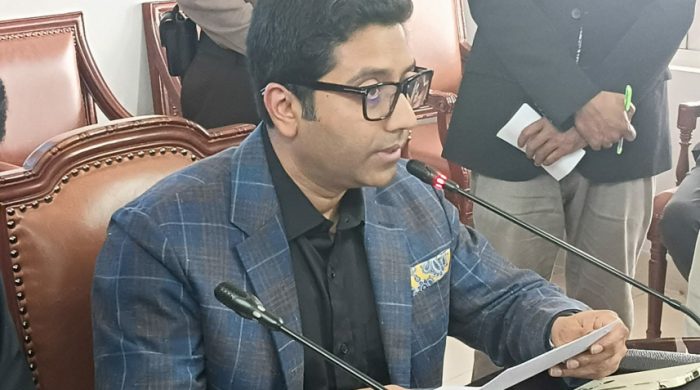
The government will no longer treat the education budget as a mere cost but as the “first investment of the state”, State Minister for Education Bobby Hajjaj said today.
“Education will be the state’s first investment, the core factory of human resources, and the principal project of nation-building,” he said while unveiling a 12-point policy agenda at a press conference at the Ministry of Education in the Secretariat around 12:30pm.
Google News LinkFor all latest news, follow The Daily Star’s Google News channel.
Bobby Hajjaj said he and Education Minister ANM Ehsanul Hoque Milon were delivering a clear message under Prime Minister Tarique Rahman’s leadership that education would be placed at the centre of nation-building.
The state minister said the government was committed to raising the allocation for education to 5 percent of GDP, fulfilling an electoral pledge.
He noted that in recent years, allocation had hovered around 12 percent of the national budget and roughly 1.5 to 2 percent of GDP, which he described as a structural limit. Referring to international norms, Bobby Hajjaj added that countries typically spend 4 to 6 percent of GDP and 15 to 20 percent of total public expenditure on education.
Under a medium-term budget framework, the education ministry will work with the finance ministry to prepare a three-year fiscal uplift plan, he said.
“Future allocations will focus not only on the total amount but also on equity and learning outcomes,” the state minister added.
Acknowledging weaknesses in development expenditure, the state minister said a large portion of funds was often spent at the end of the fiscal year, causing projects to miss the academic calendar.
“Around 53 percent of the secondary and higher education development fund remained unspent last fiscal year and was returned. This is not only a financial failure; it is a loss of time and opportunity for students,” he said.
To address this, he said, the ministry plans to realign project approval and annual development programme processes with the school calendar, introduce milestone-based cash releases instead of equal instalments, and ensure early procurement planning through the electronic government procurement system.
Bobby Hajjaj emphasised that while accounts may be tracked up to the Controller General of Accounts’ ledger, the ultimate goal of spending must be classroom contact hours.
Recurrent expenditure, he said, keeps schools running, but development expenditure improves learning. Key priorities include strengthening teacher training institutions, upgrading laboratories, libraries, and language labs, expanding digital content and assessment capacity, and improving school infrastructure, particularly water, sanitation, and safety.
The government will also implement electoral pledges such as midday meals, clean toilets, and appropriate health support for female students, he added.
“Quality education means not only textbooks but also students’ dignity,” he said.
Referring to the “one teacher, one tab” pledge, Bobby Hajjaj said the initiative would be treated as a pedagogical reform rather than a gadget project.
“The tabs given to teachers will include lesson-plan templates, question banks, attendance systems, and tools to upload learning evidence for tracking student progress. In coordination with the ICT division, schools will introduce compulsory digital literacy, artificial intelligence awareness, and cyber safety,” the state minister said.
He also said compulsory third-language education will be introduced in phases alongside Bangla and English, aligned with labour market and higher education needs.
“Listening and speaking skills will gradually be incorporated into assessments, while curricula and examinations will shift from rote learning to reasoning-based evaluation. The National Curriculum and Textbook Board will publish learning trajectories and concept maps to guide teaching and learning,” he said.
He also said to strengthen accountability, the ministry will publish monthly public dashboards on project progress, training, textbook distribution, and class hours, and introduce school-level report cards covering attendance and contact hours.
Bobby Hajjaj outlined a three-phase timeline — a diagnostic review of budget implementation and a root-cause analysis of unspent development funds will be completed before Eid-ul-Fitr, followed by a national education roadmap with measurable indicators.
“We will not do politics with education; we will build the state through education,” he said.